And The Winner Is …

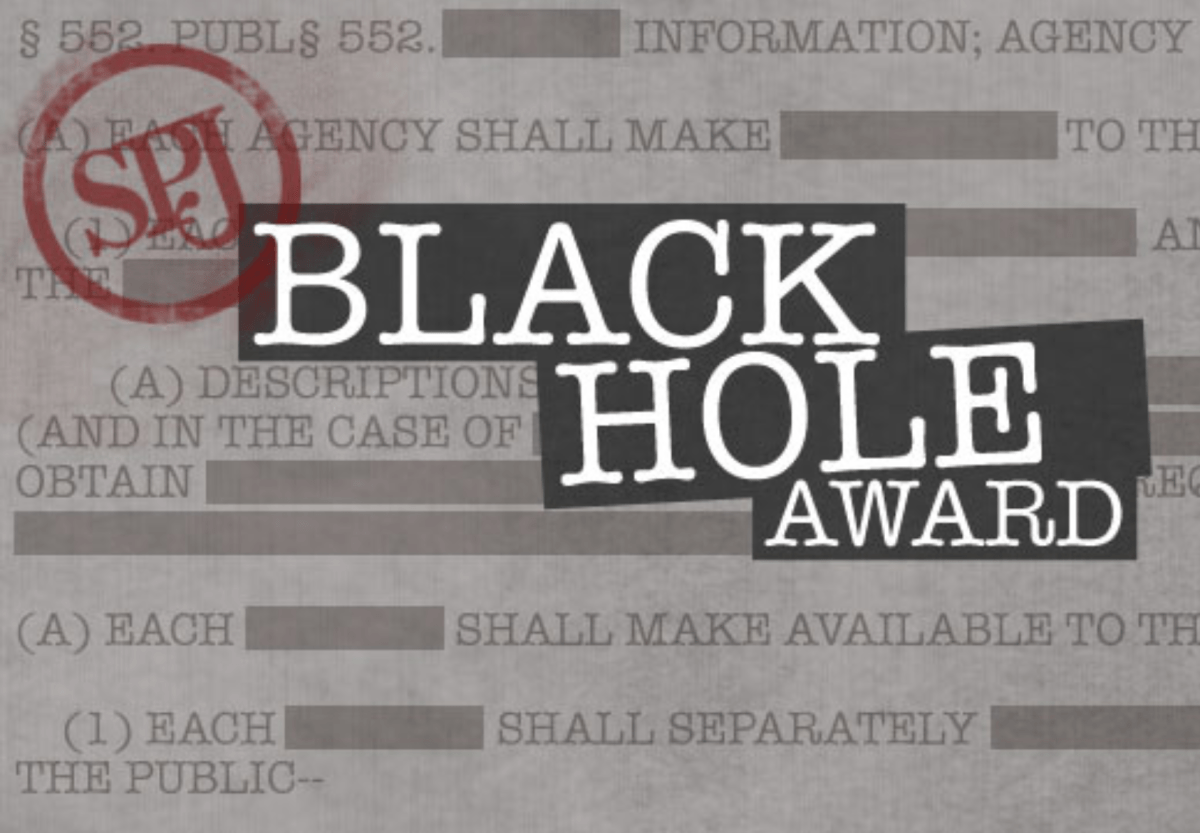
I nominated SEPTA CEO and General Manager Leslie S. Richards for the Society for Professional Journalists’ 2024 Black Hole Award. The cash-strapped public transit agency has money to pay an outside law firm to fight the release of records as ordered by the Pennsylvania Office of Open Records.

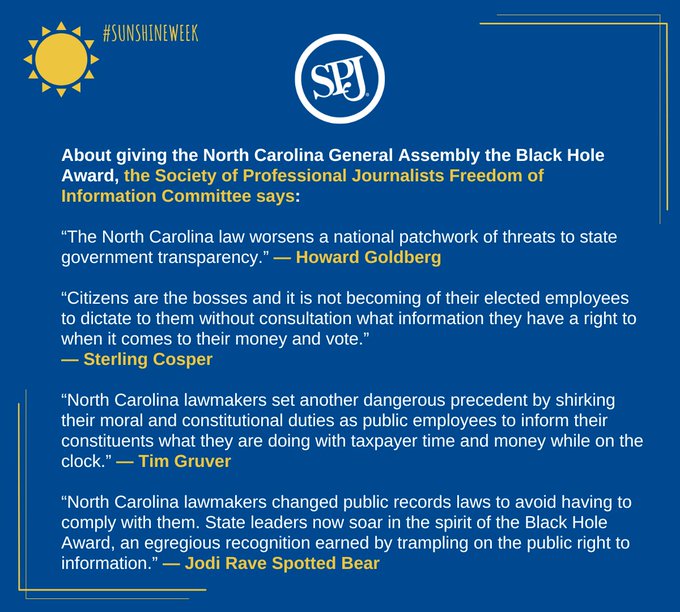
In the OOR’s final determination, SEPTA was ordered to turn over records related to the Philadelphia 76ers’ proposal to build a basketball arena atop Jefferson Station. Like the transit agency she has run into the ground, Richards did not make the cut. The Black Hole Award went to the North Carolina General Assembly.
During Sunshine Week, I received notice that SEPTA submitted the Certified Record of my Right-To-Know Law Request to the Commonwealth Court of Pennsylvania. The legal maneuver is designed to delay compliance with the OOR order. Common sense suggests that if the records supported the Sixers’ claim that 76 Place is a “win-win” for SEPTA and the City of Philadelphia, they would have been released. It bears remembering what SEPTA Director of Media Relations Andrew Busch told NBC Sports Philadelphia in July 2022:

Yes, the Sixers have been in touch with SEPTA regarding their plans for the new arena. We are looking forward to continuing to work closely with the team, the city and other stakeholders moving forward.

There is still no timeline for release of the arena impact studies that were due in December 2023. Tellingly, the Sixers have not released their study that supports their factoid that 76 Place would generate $1.5 billion in new tax revenue. The Philadelphia Inquirer reported:

They have declined to share the calculations behind their tax figure. And they’ve made other bold claims, including the creation of 1,000 permanent jobs and $400 million in annual “economic output.” Meanwhile, the city-sponsored studies that are supposed to offer clarity to decision-makers are months overdue.

With an air of exasperation, City Councilmember Mark Squilla recently told CBS News Philadelphia: “By the end of this year, it will be determined whether we move forward or not.” The clock is ticking.
Sunshine Week: John Coltrane House Update

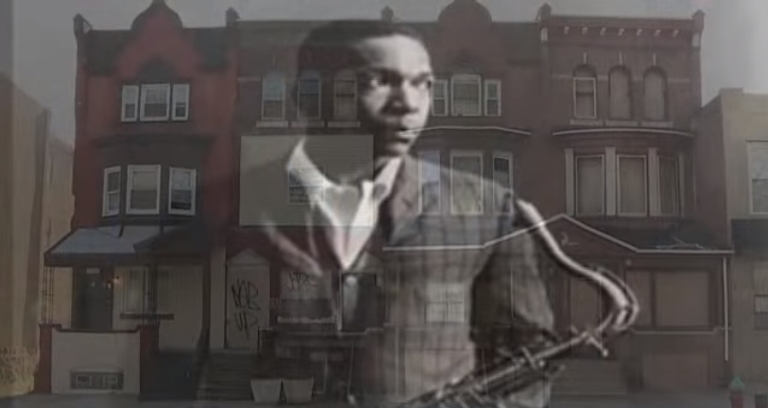
March 10-16, 2024 is Sunshine Week, a time to celebrate transparency, and the right to know what government officials are doing and saying behind closed doors. I used the Freedom of Information Act (FOIA) and Pennsylvania’s Right-To-Know Law to tell the story of the deteriorating condition of the John Coltrane House and the drama over ownership of the National Historic Landmark.

John Coltrane’s beloved “Cousin Mary,” Mary Alexander, sounded the alarm about the physical deterioration of the property as early as 1987.

From time to time I would check on the Coltrane House. Without access to the property, I reported illegal dumping and other violations visible from the public right of way. I am a cold weather person but on a hot and humid morning in August 2019, I felt an overwhelming urge to stop by the Coltrane House. I later learned that Cousin Mary joined the ancestors the same day that I was snooping around her former home. I vowed then that I would do whatever I could to preserve the historic landmark in public memory.

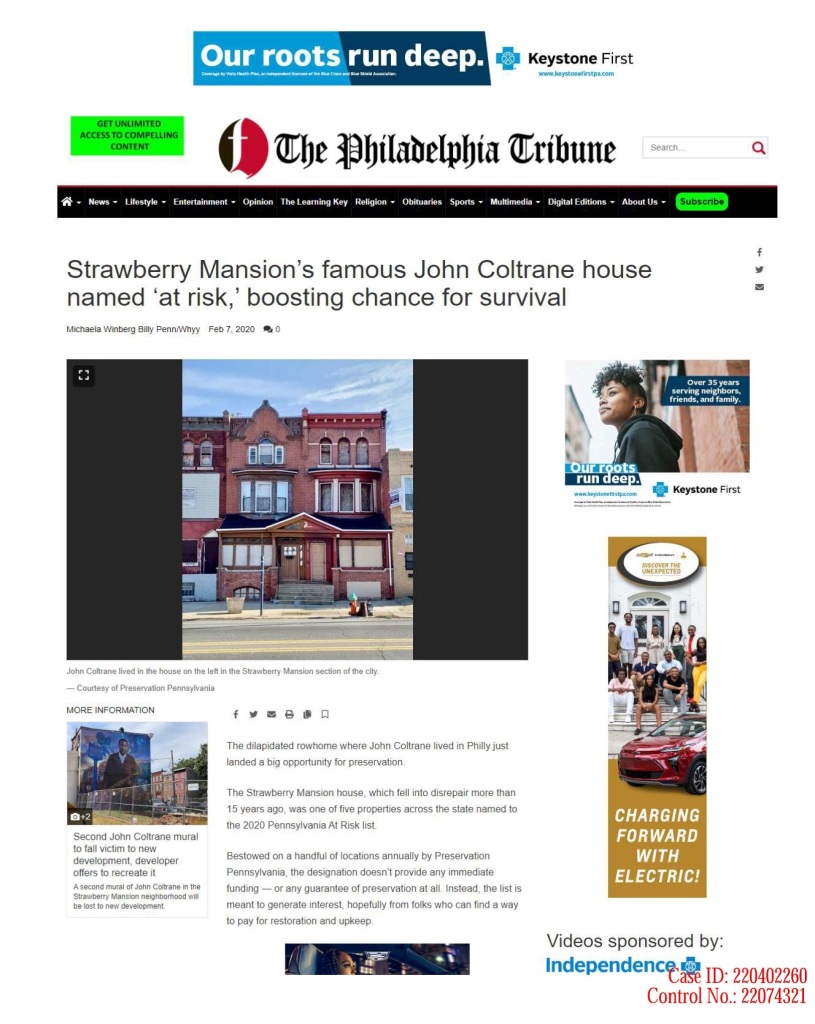
I successfully nominated the Coltrane House for inclusion on 2020 Pennsylvania At Risk. Designation does not bring any resources; instead, it brings renewed media attention to a historic landmark at risk of demolition by neglect.

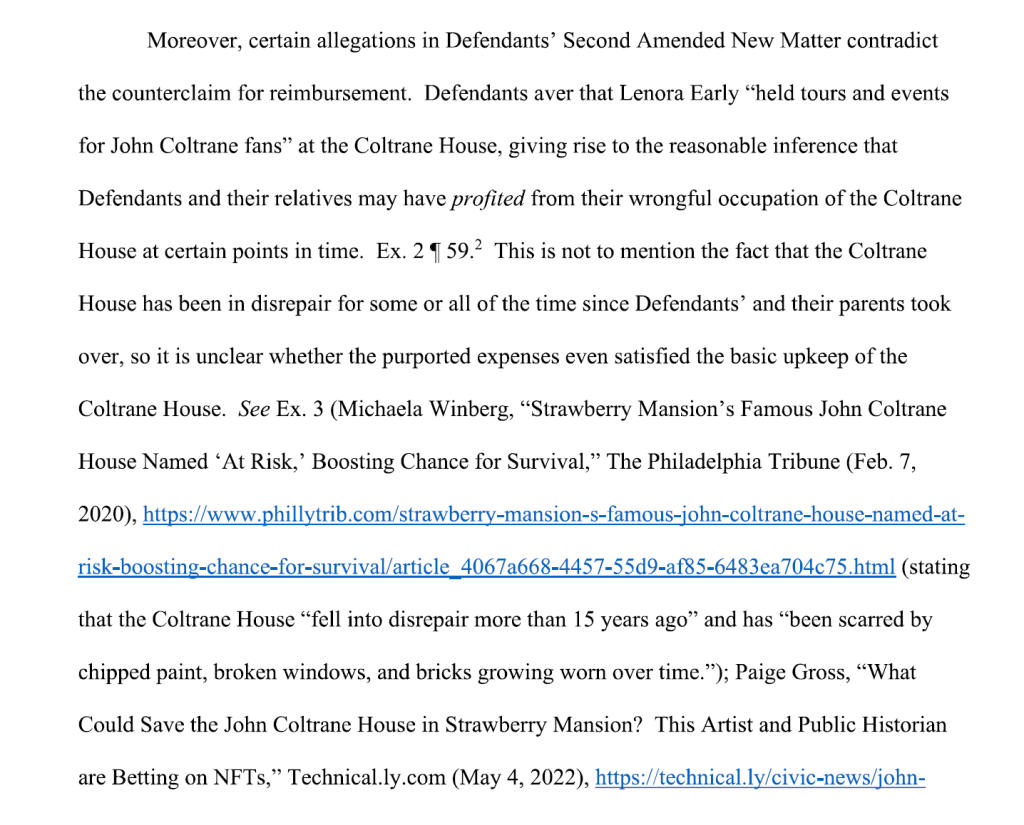
News stories about the designation were published in February 2020. I had a conference call with Ravi Coltrane to explore next steps on March 13, 2020. I have not spoken with him since that conversation. However, news articles about the At-Risk designation were included as exhibits to the case that Ravi and Oran Coltrane filed to gain possession of the property on April 27, 2022.

Fast forward to May 2023, the parties reached an agreement in principle. The outcome was predetermined given the existence of a valid will. Under the terms of their grandmother’s will, Ravi and Oran should have gained possession of the property upon the death of Cousin Mary on August 31, 2019.

Norman Gadson is still listed as the owner on property and tax records. Last week, the New York Times reported the African American Cultural Heritage Action Fund, a program of the National Trust for Historic Preservation, “will assist in coordinating and financing the transfer of Coltrane’s home from its current owner back to his family.”

The Coltrane House is the first site selected for the new Descendants and Family Stewardship Initiative. Brent Leggs, executive director of the Action Fund, said:

Descendants and families have been doing this work for centuries on an informal basis. The initiative is about empowering descendants and families through historic preservation more formally. Our role is to give them the resources and technical expertise they need to protect and preserve the physical evidence of the past and share their profound stories with the American public.

It has taken nearly four decades, but the John Coltrane House will finally be restored. As I told Valerie Russ of the Phliladelphia Inquirer, my work is done. Mission accomplished.

Sixers’ Math Ain’t Mathing

The Philadelphia 76ers publicly announced their proposal to build a basketball arena atop Jefferson Station on July 22, 2022. The billionaire owners’ “done deal” has devolved into an echo chamber of attacks and counterattacks by opponents and supporters of 76 Place. In the absence of facts, the Sixers’ communications team has filled the void with fanciful factoids like “76 Place is a slam dunk for Philly’s economy.” They claim an arena that would be closed more days than it would be open would generate $1.5 billion in new tax revenue.

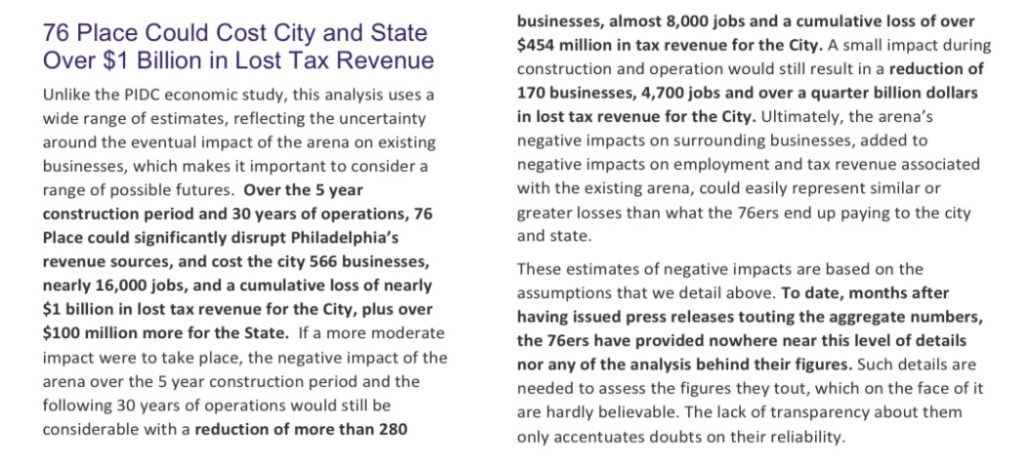
The Sixers’ math ain’t mathing. Study after study shows sports venues have a limited economic impact. In the most recent economic analysis, Dr. Arthur Acolin of the University of Washington found that 76 Place could cost Philadelphia and Pennsylvania more than $1 billion in lost tax revenue.

CBS News Philadelphia reports:

With zero self-awareness, Sixers’ limited partner David Adelman questions Prof. Acolin’s objectivity.

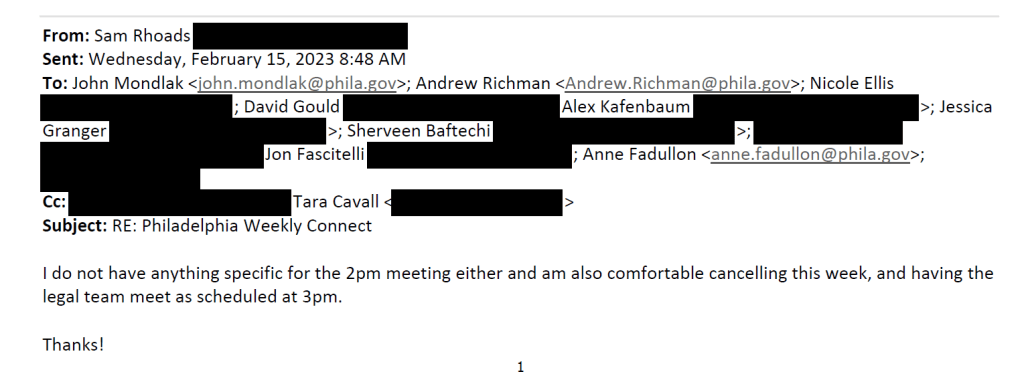
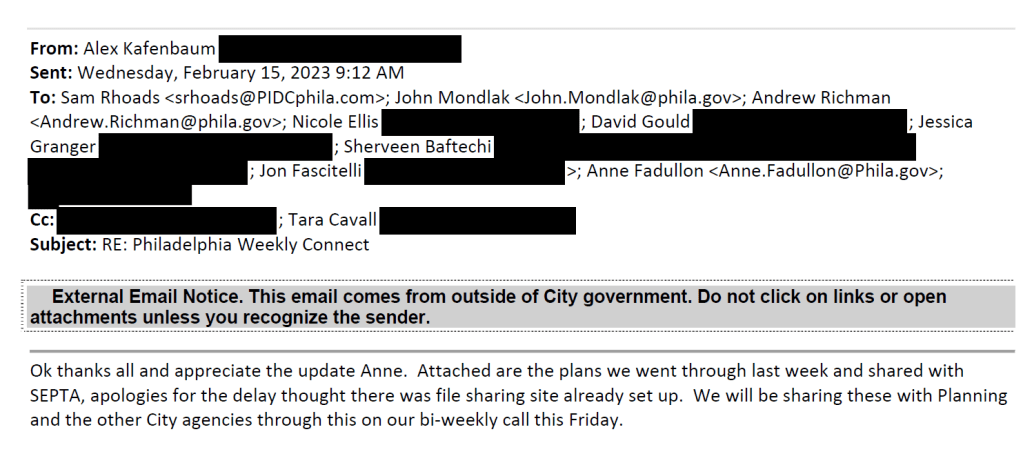
In the billionaire’s worldview, the public should be skeptical of an academic study but trust the economic analysis of a firm hired by PIDC and paid for by the Sixers. Records received in response to my Right-To-Know Law requests show then-PIDC president Sam Rhoads participated in “Philadelphia Weekly Connect” meetings with 76 Place representatives and government officials.

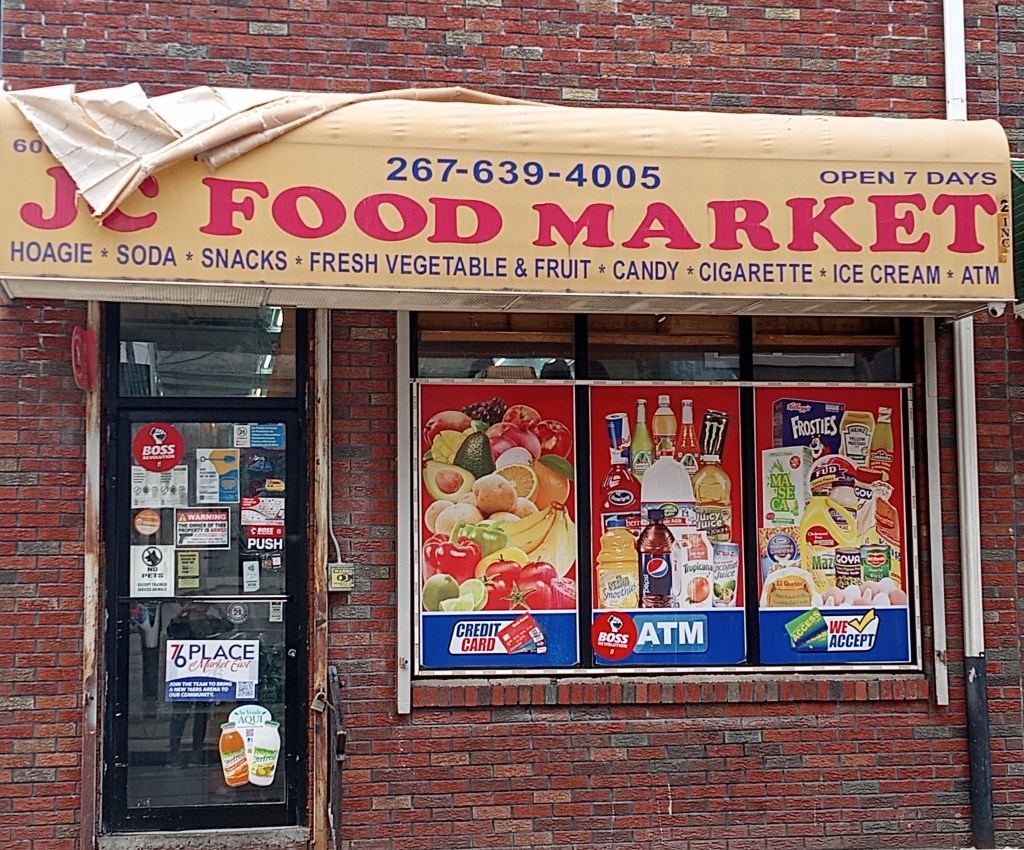
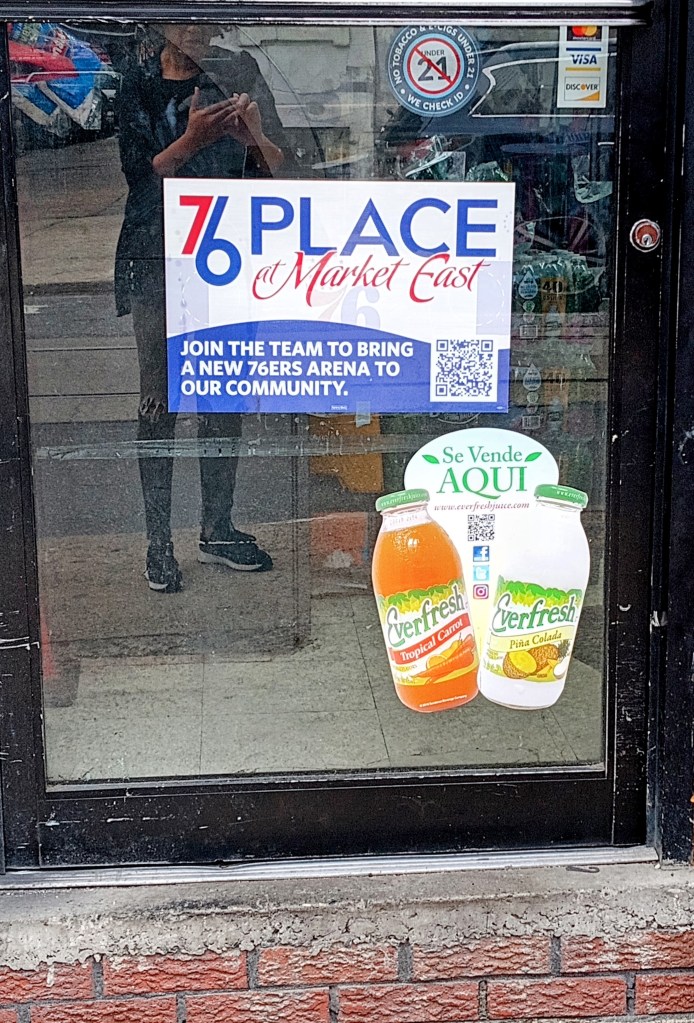
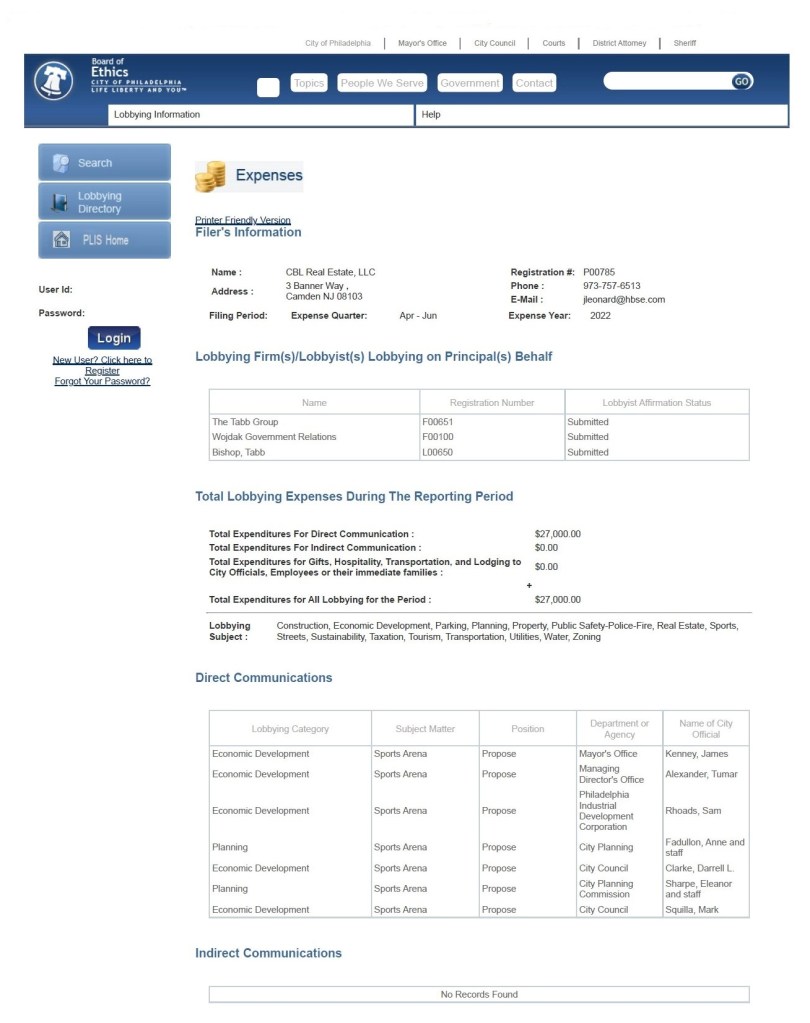
In their increasingly desperate quest for approval of their transit-oriented project in a city “without a viable transit system,” the Sixers have spent millions on lobbyists, advertising and canvassers. I recently spotted a 76 Place billboard on the Lit Brothers building. I did not take any photos because the digital images were as fleeting as the 76ers’ odds of getting past the second round of the NBA playoffs.

Philadelphia Sheriff Bilal Misfires

I shot the sheriff. But I didn’t shoot the deputy (h/t Bob Marley). You won’t read about it in the Philadelphia Inquirer or any news outlets because it didn’t happen. Nor will you read about Philadelphia Sheriff Rochelle Bilal’s “record of accomplishment during her time in office.” The Inquirer reported:

Her first term in office has been bumpy, to put it mildly, as she has dealt with everything from whistle-blower lawsuits to a broken tax-sale system.

But Bilal has been telling a different story on her campaign website. It features dozens of favorable headlines attributed to local news organizations such as NBC10, CBS3, WHYY, and The Inquirer, all listing the dates of publication.

“This page,” the site proclaims, “highlights Sheriff Bilal’s record of accomplishment during her time in office.”

One snag: No one can seem to find any of the supposed news stories

For an office plagued by corruption and shady deals, spreading fake news and wasting taxpayers’ money on Deputy Sheriff Justice are “accomplishments.”

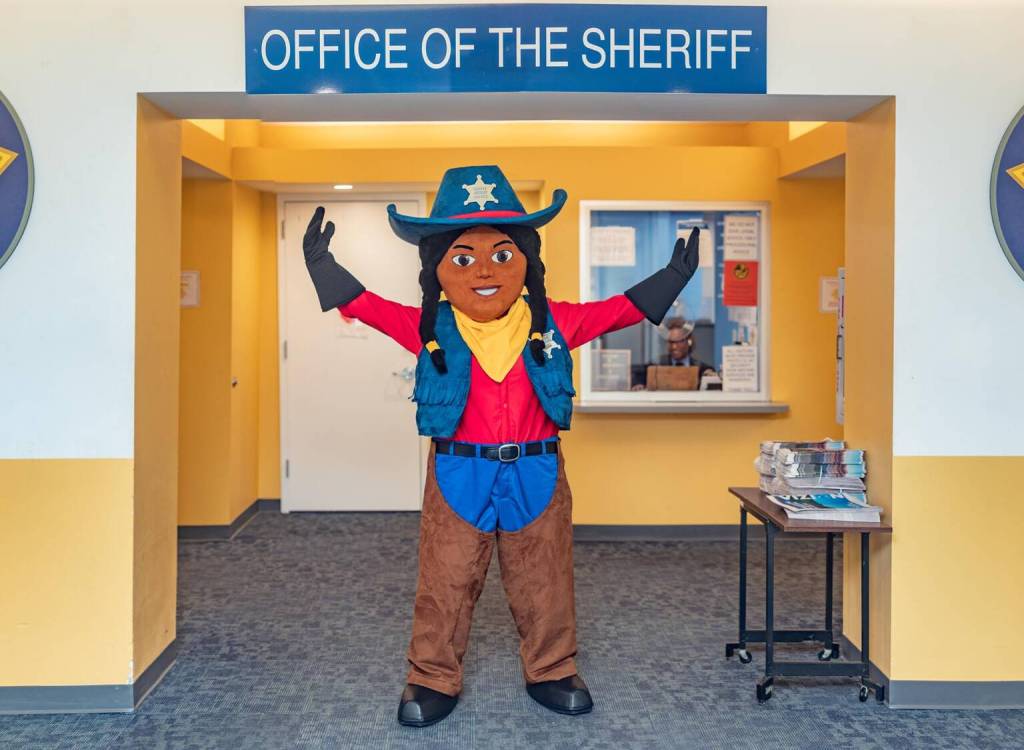
The Sheriff’s mascot gives new meaning to no justice (read: transparency and accountability), no peace from investigative journalists.

UPDATE: Philadelphia Sheriff Rochelle Bilal wasn’t tripping; ChatGPT was hallucinating. The Associated Press reports:

Sheriff Rochelle Bilal’s campaign removed more than 30 stories created by a consultant using the generative AI chatbot. The move came after a Philadelphia Inquirer story on Monday reported that local news outlets could not find the stories in their archives.

Experts say this type of misinformation can erode the public trust and threaten democracy. Bilal’s campaign said the stories were based on real events.

“Our campaign provided the outside consultant talking points which were then provided to the AI service,” the campaign said in a statement. “It is now clear that the artificial intelligence service generated fake news articles to support the initiatives that were part of the AI prompt.”

Read more.

Philly Style Civic Design Review

Civic Design Review (CDR), a committee of the Philadelphia Planning Commission, is holding a special meeting to evaluate the Philadelphia 76ers’ proposal to build an arena adjacent to Chinatown. CDR is triggered by building projects of a certain size and/or location as outlined in the Philadelphia Code.

The Planning Commission is an agency within the Department of Planning and Development (DPD). Eleanor Sharpe, DPD interim director, said in a press release:

Whenever a major private development project is proposed, the City looks closely at the proposal to understand the complications, challenges, and potential positive and negative impacts. It is the City’s responsibility to make sure that the people of Philadelphia will benefit as much as possible if the project—in this case, an arena—becomes a reality. Figuring this out is what we mean by “due diligence.”

The public forum was preceded by 15 months of closed door meetings between Planning Commission officials and representatives of the Sixers – the same people who will appear before the CDR Committee.

An investigation by the Philadelphia Board of Ethics found that Sharpe, then-director of the Planning Commission, diligently met with Sixers’ lobbyists beginning in April 2022 – three months before the public announcement of 76 Place.

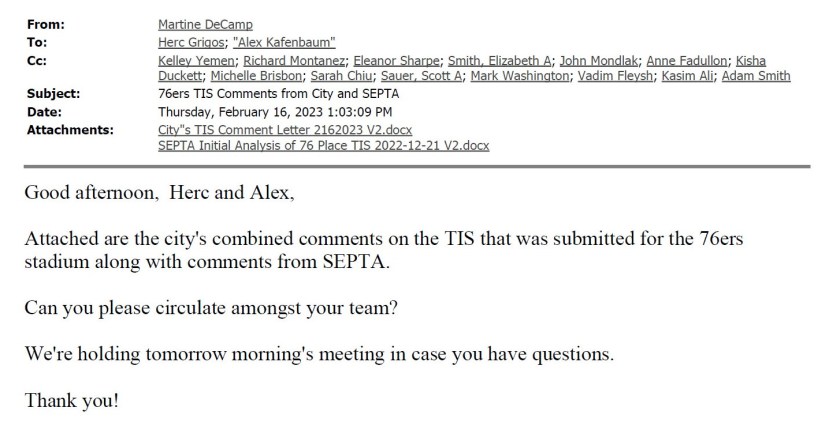
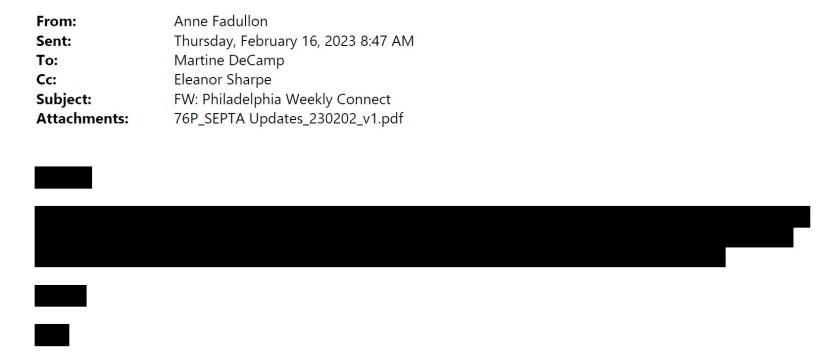
Records obtained in response to my Right-To-Know Law (RTKL) request show that Sharpe and Martine Decamp regularly communicated about 76 Place. Decamp, interim director of the Planning Commission, is a member of the CDR Committee.

After the Board of Ethics released its report, I submitted a new RTKL request to the Planning Commission, specifically requesting records related to Sharpe’s and Decamp’s communications about the proposed arena. The agency did not respond so I filed an appeal with the Office of Open Records (OOR).

The OOR issued its final determination on November 20, 2023. My appeal was granted in part and denied in part. The OOR found that portions of my request are sufficiently specific, and that the request is not disruptive or repetitive. The OOR ordered the City to search for responsive records and turn them over to me by December 20, 2023. Instead, the City appealed the OOR’s decision to the Philadelphia County Court of Common Pleas to block release of the records.

Paula Knudsen Burke, the Reporters Committee for Freedom of the Press Local Legal Initiative attorney for Pennsylvania, is representing me in this matter.

Knudsen Burke’s due diligence will eventually disclose what Sharpe, Decamp and other Planning Commission officials said behind closed doors.