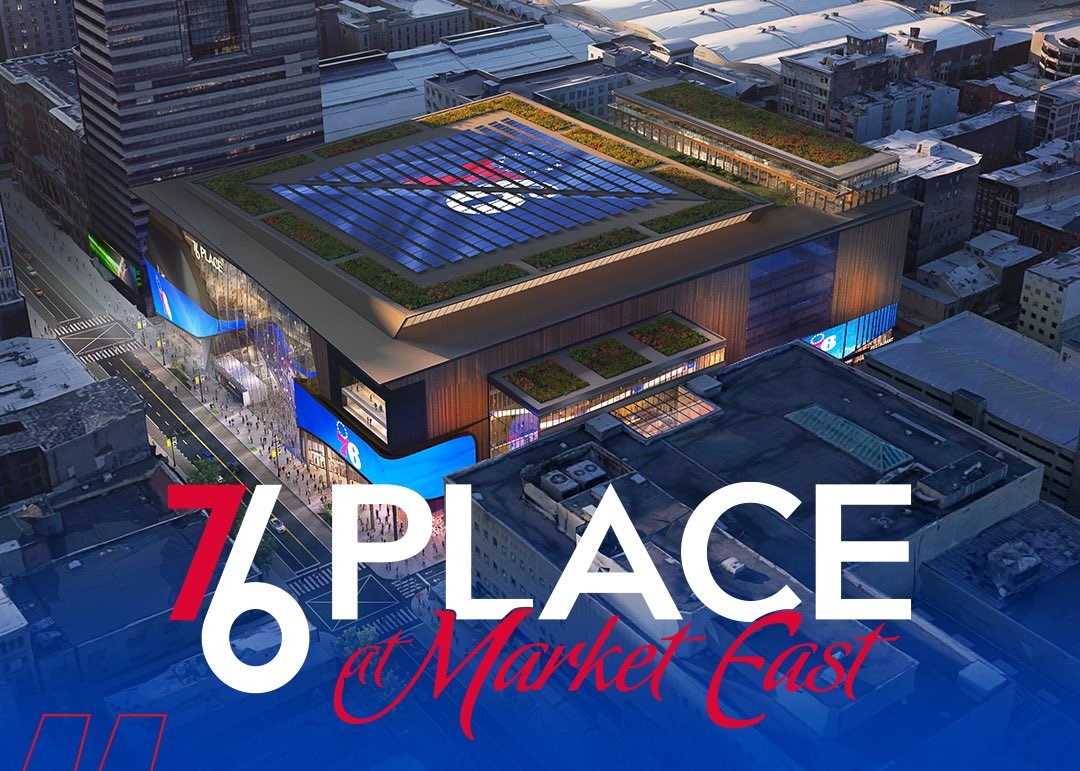
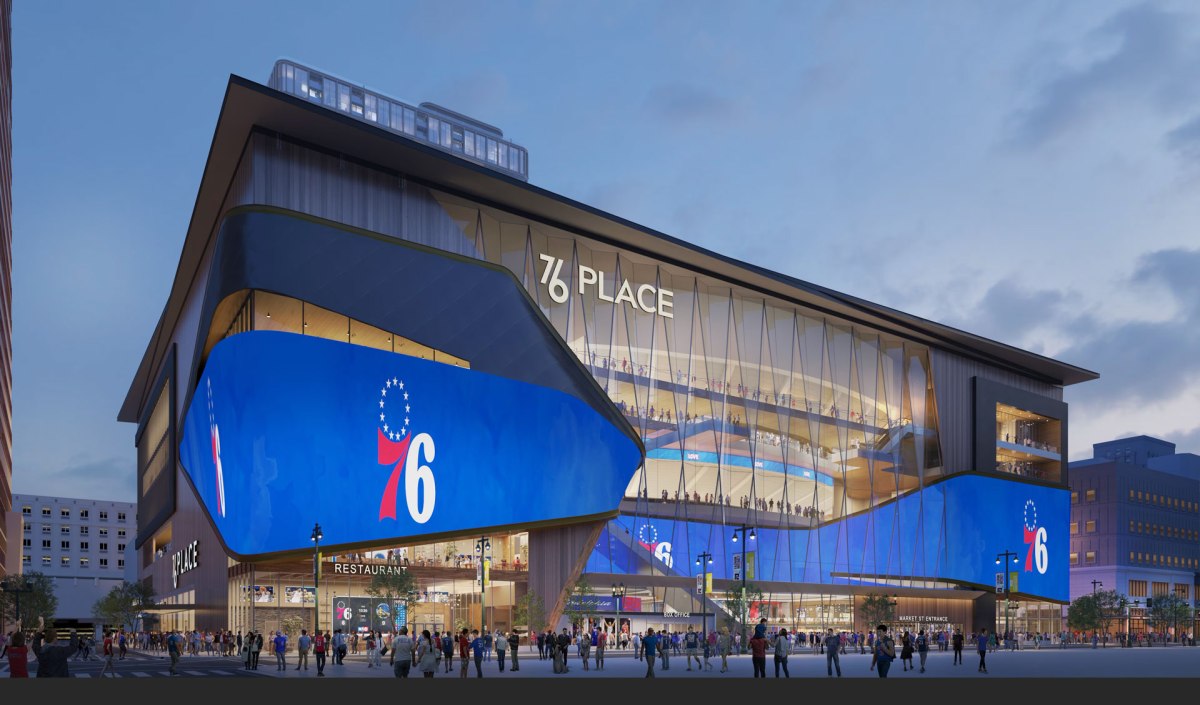
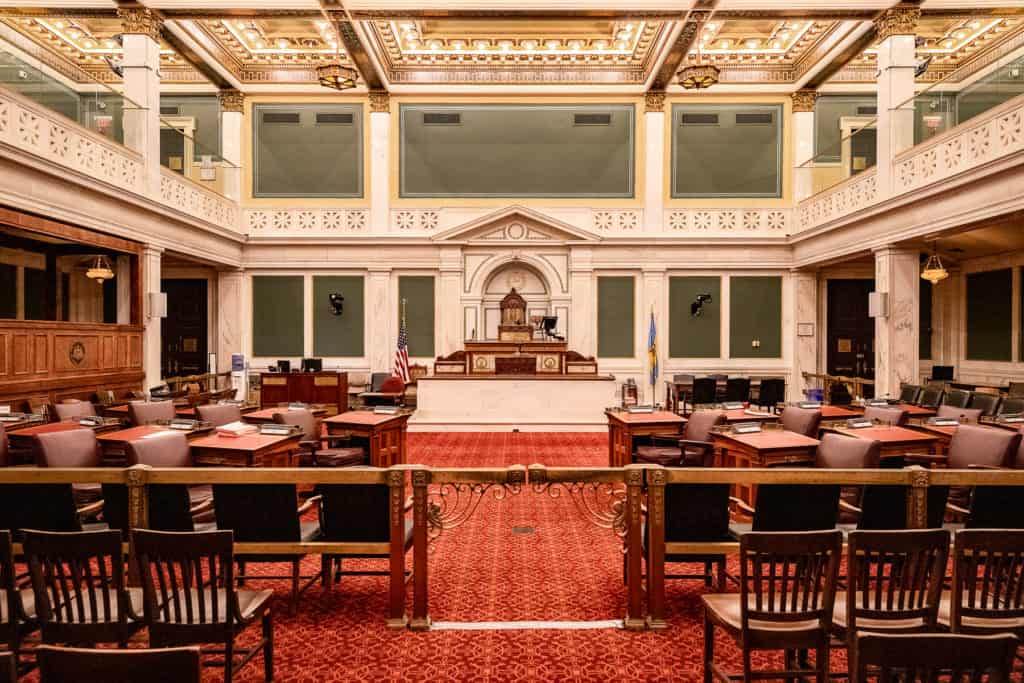
As expected, City Council gave final approval to enabling legislation that gives the Philadelphia 76ers a zoning permit to build an arena in the footprint of the Fashion District. Mayor Cherelle L. Parker said, “All of Philadelphia will benefit from this project.”
Truth be told, the 12 to 5 vote is a victory for the building trades unions and the Sixers billionaire owners. In this infamously “corrupt and contented” city, mayors and City Councilmembers genuflect to Big Labor. But neither Parker nor City Council has the authority to give the Sixers the right to enter SEPTA’s property. The billionaires now must get the approval of SEPTA and the Federal Transit Administration to enter Jefferson Station. David Adelman tacitly acknowledges this fact in a tweet sent after the vote:
We look forward to pursuing the remaining approvals to make 76Place a reality.
The enabling legislation does not include a solution to SEPTA’s recurring budget deficit of $240 million. The flex funding is a stopgap measure that bought SEPTA six months before the transit agency, again, faces a “death spiral.” SEPTA officials have already testified that the transit agency cannot be “burdened” with the operational costs of managing the demolition of the Fashion District, construction of the arena, and additional service to accommodate the 76ers’ schedule.
Philadelphia has ranked as the poorest big city in the country for decades. The high poverty rate is not a bug; it’s a feature. Philadelphia’s misleaders are not interested in reducing poverty because there’s a lot of money to be made by insiders and cronies managing poor people.
There is also a lot of money to be made by insiders and cronies with the Sixers’ proposal to build an arena atop SEPTA’s Jefferson Station. For more than two years, the billionaire owners of the Philadelphia 76ers have spent millions of dollars lobbying and spreading misinformation about the economic benefits of 76 Place.
By a vote of 12-4 on December 12, 2024, City Council gave preliminary approval to legislation enabling 76 Place to move pass the first round. Councilmembers Jamie Gauthier, Rue Landau, Nicolas O’Rourke, and Jeffery Young Jr. voted against the enabling legislation. Councilmember Kendra Brooks, a staunch opponent of the arena, was absent.
The Sixers made it pass the first round with an assist from Philadelphia’s misleaders. The enabling legislation does not give the billionaires the right to construct an arena on SEPTA’s property. They will need more than the building trades unions to get the approval of SEPTA, which is teetering on the brink of a “death spiral,” and President Donald Trump’s Federal Transit Administration.
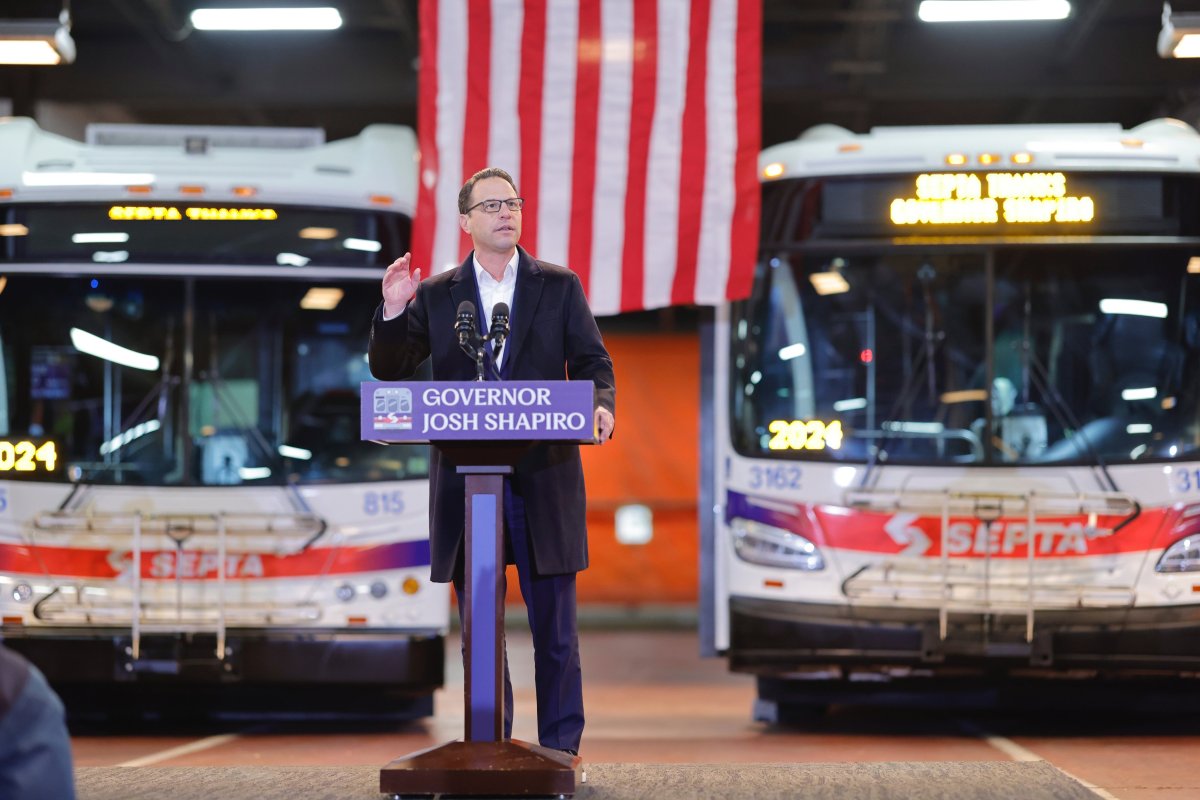
With no light at the end of the tunnel, Gov. Josh Shapiro stepped in and temporarily stopped SEPTA from going into a “death spiral.” Shapiro announced that he is transferring $153 million in federal highway capital funds to the beleaguered public transit agency. The one-time infusion of cash will cover this year’s operating budget deficit, and delay dramatic fare increases and service cuts.
Also last week, SEPTA released a draft report about the impact of the Philadelphia 76ers’ proposal to build an arena atop Jefferson Station. The Econsult Solutions Inc. report is the only impact study not paid for by the Sixers. The report debunks the claim that 76 Place would boost SEPTA’s bottom line:
Construction of 76 Place will cause significant disruption and cost SEPTA $22 million – $50 million during construction;
Additional service to achieve arena’s 40 percent transit share will cost SEPTA $20 million – $25 million annually.
The ESI study and SEPTA officials’ testimony at the arena public hearing should signal the end of the 76 Place saga. But this is Philadelphia where as President-elect Donald Trump infamously said, “bad things happen.” So, City Council could ignore the writing on the wall and pass enabling legislation for the proposed arena. Meanwhile, Mayor Cherelle Parker continues to hold “community meetings” about the project.
Fact is, neither City Council nor Parker will have the last word. 76 Place must be approved by Trump’s Federal Transit Administration. The ESI impact study notes drily: “It is not clear that the FTA will approve the station design as currently proposed.”
For more than two years, Philadelphia 76ers co-owner and 76 Place hype man David Adelman crowed that the Sixers’ proposal to build an arena atop SEPTA’s Jefferson Station is a win for the city. Adelman regaled sycophants on X/Twitter and sports podcasters. But the billionaire was a no-show at City Council’s hearing on their proposal. City Councilmember Cindy Bass rightly asked:
Who thought this would be a good idea? I’m suspecting that it’s the owners of the Philadelphia 76ers, none of whom felt the need to come and discuss their vision or concept with us today which is quite inappropriate and disrespectful and just really callous.
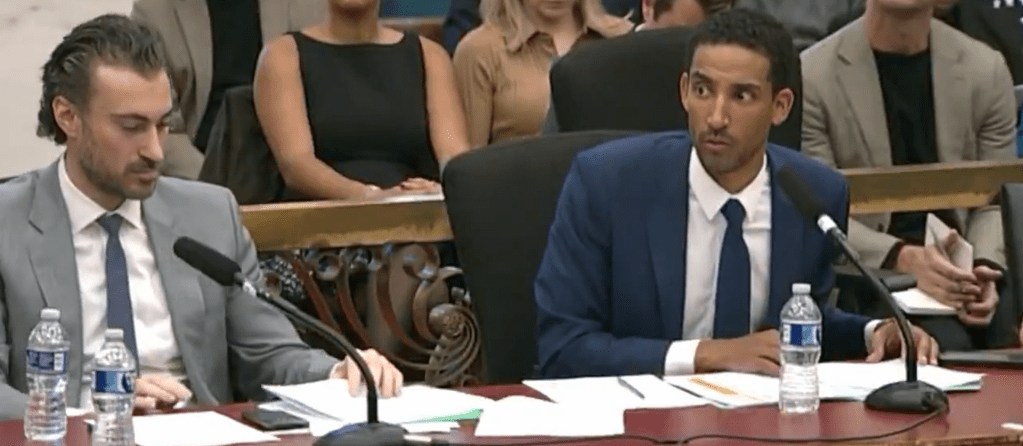
The billionaires prefer to discuss their “vision” behind closed doors. So, Adelman sent their G Team – Alex Kafenbaum, senior vice president and head of development for Harris Blitzer Sports & Entertainment (HBSE owns the Sixers), and David Gould, HSBE’s chief diversity and impact officer.
Kafenbaum and Gould should have been benched. Denise Clay-Murray of The Philadelphia Sunday SUN wrote:
To understand just how badly the first two days of hearings on the proposed arena for your 76ers went for the Parker administration and the Sixers themselves, you’d have to return to your school days.
We all have had that moment where we’re staring at a test and asking ourselves, “How am I going to pass this?” It’s a feeling that usually comes when you don’t study as much as you could have and aren’t quite as prepared as you could have been.
You knew the test was coming. It was clearly marked on the syllabus. You had plenty of time to study for it because the teacher had told you several times that it was coming. You even got a study guide with everything you needed for the test.
[…]
But the only response that Council heard more than “I don’t know” is “No,” which was uttered by Gould and Kafenbaum a lot when it came to the Community Benefits Agreement, the upgrades of SEPTA’s Jefferson Station that would be needed for this project due to the increase in traffic, and just about everything else.
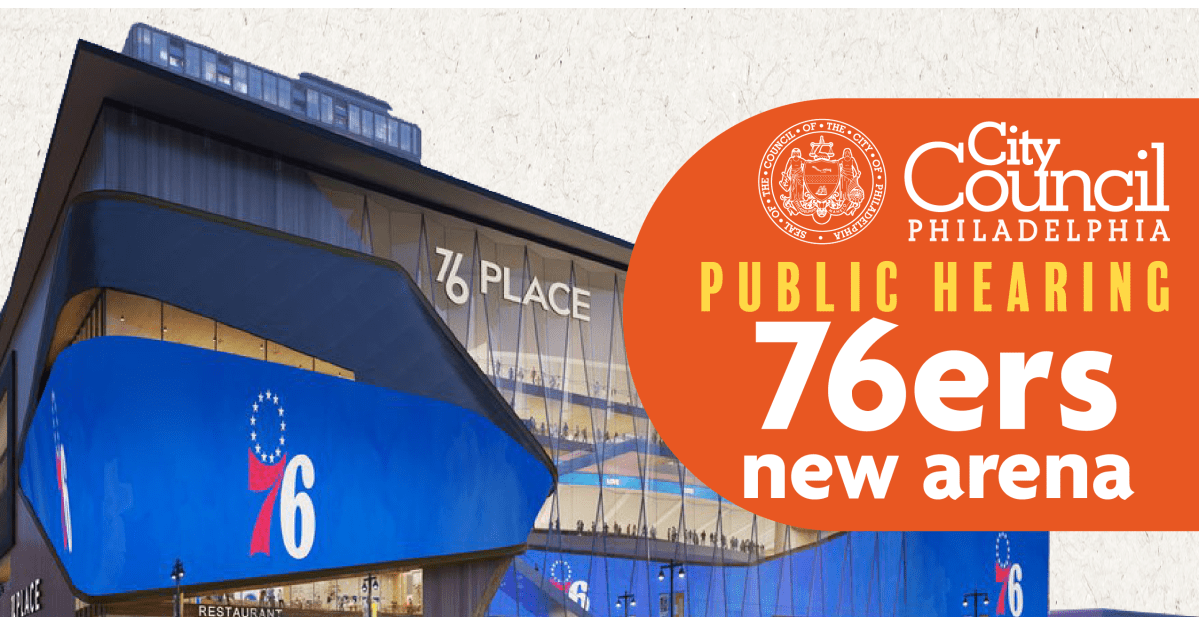
City Council has kicked off public hearings on the Philadelphia 76ers’ proposal to build an arena atop SEPTA’s regional rail Jefferson Station. Council President Kenyatta Johnson said:
Mayor Cherelle Parker’s Administration made the proposed Sixers arena legislation available to the public back in late September. Councilmember Mark Squilla, whose Council district the proposed arena would be located, introduced the 13 pieces of legislation on October 24. Councilmember Squilla has been working very hard over the past two years in addressing the concerns of his constituents.
Now that the legislation has been introduced, Council and every Council member is now going through our legislative process and I expect spirted Committee of the Whole hearings on this proposed arena. Councilmembers will have the opportunity to ask questions of officials from the Sixers, the Mayor Parker Administration, and others about the proposed arena project.
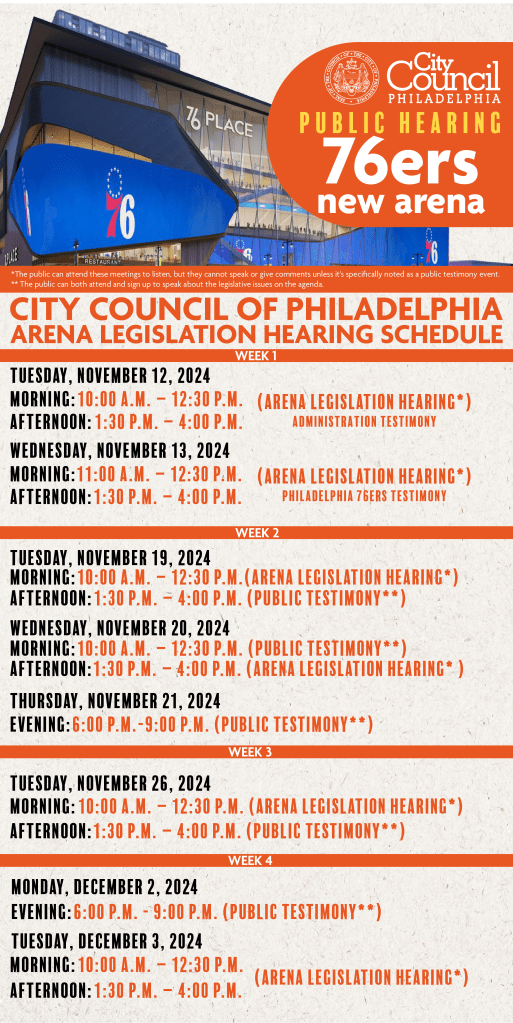
Council has launched a website to give the public up-to-date information, including the public hearing schedule.
As the first hearing was getting underway, SEPTA released a notice of public hearing on their plan to increase fares 29 percent beginning January 1, 2025. The higher fares would be “paired with major service cuts.” SEPTA Chief Operating Officer Scott Sauer said:
Today we stand with our feet on the edge of the fiscal cliff. With major service cuts and fare increases, this is the beginning of what we’ve been saying is the transit death.
…
We are managing the decline of SEPTA… Rail lines will become so infrequent that they will be useless to most of our customers.
The Sixers’ proposed arena is a public transit-oriented project anchored to a transit system on death watch. Let the 76 Place games begin.
True to form, Mayor Cherelle Parker gave “the people of Chinatown” less than 24 hours’ notice of a public meeting about the Philadelphia 76ers’ proposal to build an arena adjacent to Chinatown. At the meeting, Parker passionately defended her agreement with the Sixers, stating:
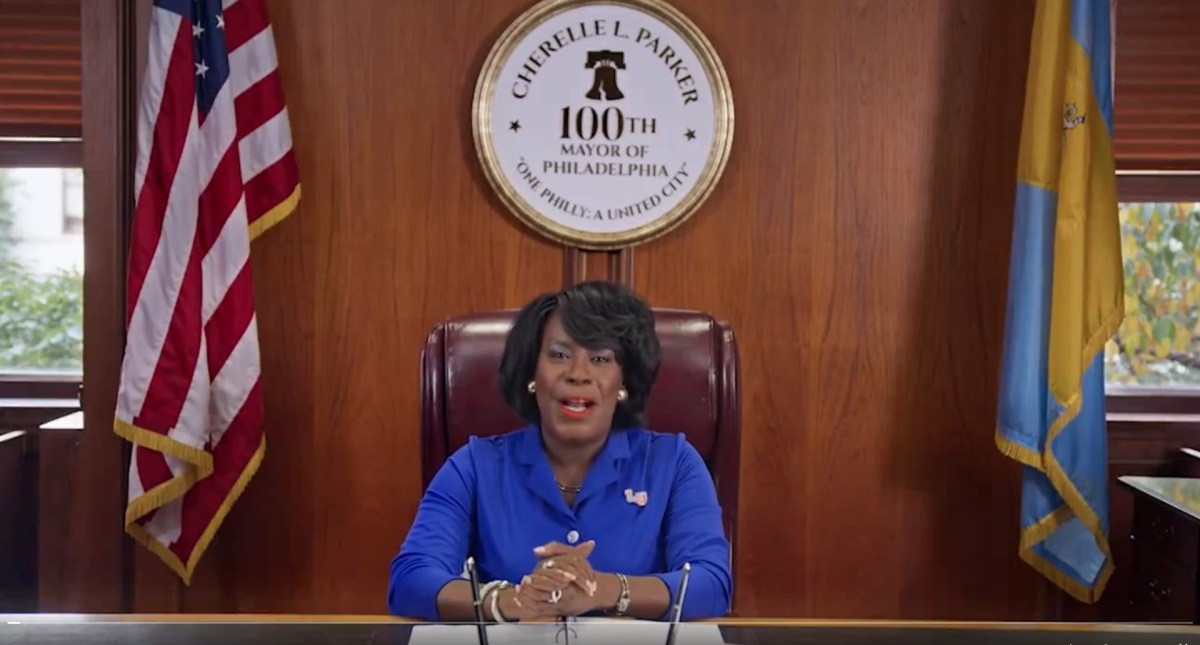
Anyone who has any challenges with what is contained in this agreement, you no longer have the Philadelphia 76ers as the villain here. I am Cherelle L. Parker. I am the 100th mayor of the city of Philadelphia. I am proud and take full responsibility for what is included in this agreement.
What Parker seems to miss is that there can be more than one villain in this story.
Parker said this “historic agreement is the best financial deal ever entered into by a Philadelphia mayor for a local sports arena.” Given the city’s track record in negotiations, “the best financial deal” doesn’t automatically mean it’s a good deal.
The Save Chinatown Coalition rightly boycotted the last-minute meeting.
Parker’s message to residents and business owners who view 76 Place as an existential threat:
I want Chinatown’s rich and vibrant community and proud history to not just survive but to thrive. We have the best Chinatown in the United States, and I am committed to working together to support it. This is a chance for new partnership and growth, based on mutual understanding and respect.
Historically, residents and supporters of Chinatowns have fought—and continue to fight—large-scale development projects that demand they and other communities of color accept disproportionate harm in the name of progress for all.
After Parker announced a Community Benefits Agreement with the Sixers, which was negotiated without input from the very community facing disproportionate harm, the National Trust released a statement:
The National Trust stands with local coalitions and the majority of Philadelphia residents who oppose the arena abutting Chinatown and will be most impacted by this devastating decision. Time and time again, history has shown us that large-scale planning decisions are made with significant consequences to communities of color. There is still time to chart a new path forward. The National Trust will continue to amplify the grave threat that this poses to one of the oldest intact Chinatown communities in the nation.
Maya Angelou’s words of caution echo here: “When someone shows you who they are, believe them the first time.”
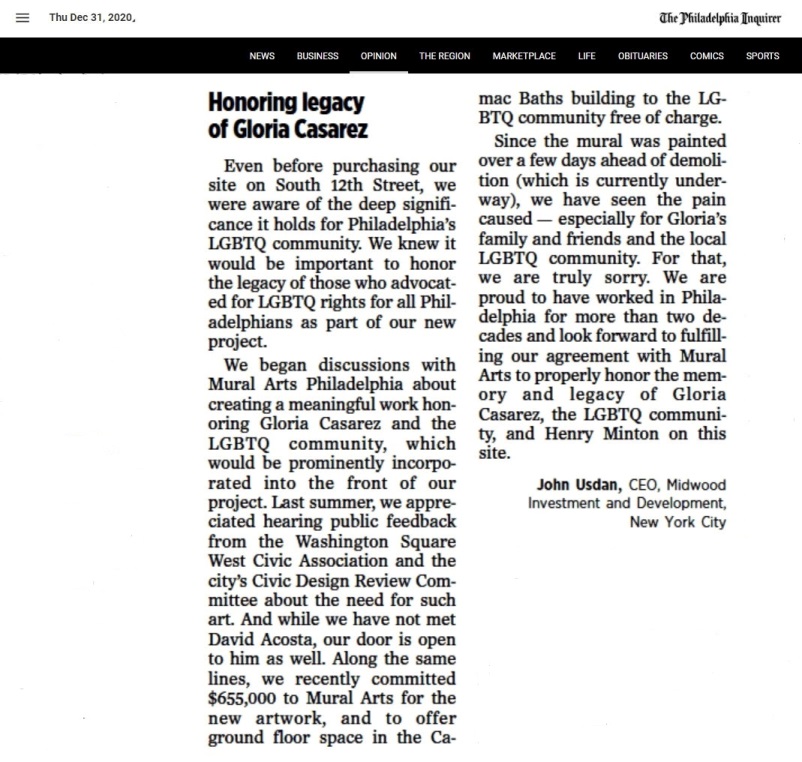
Months ago, Parker’s Art Commission ignored the zoning code and allowed Midwood Investment and Development to renege on their commitment to preserve the legacy of Henry Minton in public memory.
An elite caterer and financier of the Underground Railroad, Minton hosted figures like Frederick Douglass and John Brown. The developer erased Black history without a word from Parker.
Why should the Save Chinatown Coalition trust Parker to respect their history and cultural heritage?
With less than 24 hours’ notice to “the People of Chinatown,” Mayor Cherelle L. Parker announced her endorsement of the Philadelphia 76ers’ proposal to build an arena that would abut against the historic neighborhood.
As your Mayor, I'm speaking from my City Hall office with a very important announcement. I am proud to share that I have made my decision, and an agreement has been reached to ensure that our Sixers are staying home.
Parker may “hear” the People of Chinatown, but she is not listening. If she were, she would know 76 Place is an existential threat to Chinatown. So, the Asian American Legal Defense and Education Fund threw down the gauntlet: See you in court!
AALDEF is disappointed that Mayor Parker took a stance in support of 76 Place arena's construction—before city council has had the opportunity to officially consider the proposal with public participation.
Money talks, BS walks. New Jersey is dangling $800 million in tax credits and $500 million in bonds (read: corporate welfare) to entice the Philadelphia 76ers to walk away from their controversial proposal to build an arena in Center City. Gov. Phil Murphy wants to lure the 76ers to Camden where their corporate headquarters and practice facility are located.
For four years, the Sixers’ billionaire owners have said they will stay in Philadelphia. Now “nothing is off the table.”
Crossing Broad Sports interviewed Sixers co-owner David Adelman on June 8, 2023.
When asked whether he can “promise the team will not be moved over to New Jersey,” Adelman said:
I promise you that. Josh (Harris), David (Blitzer) and I have said from day one that this is a Philadelphia team and it’s not moving to New Jersey. You guys should take my Philly man card if that happens.
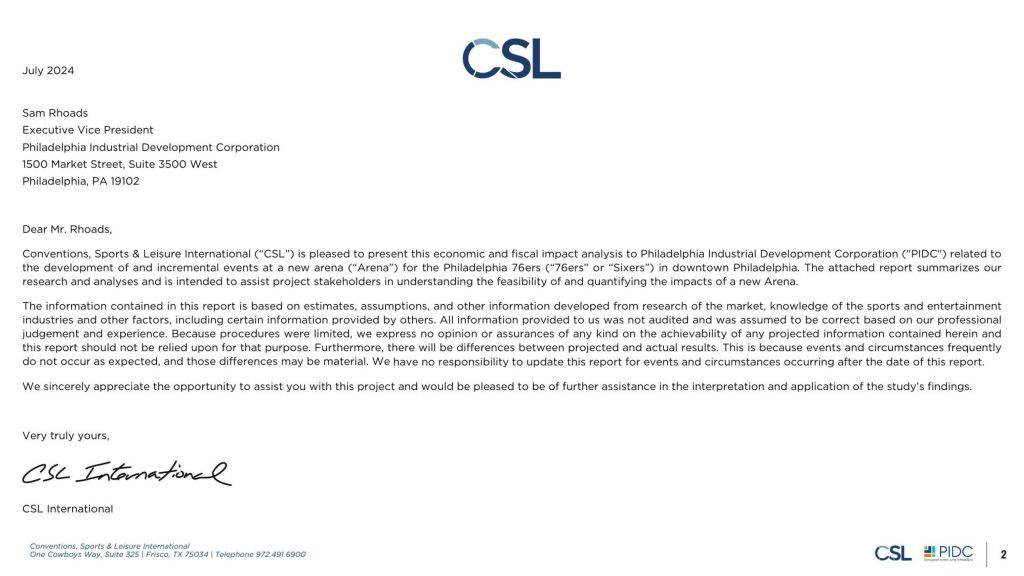
The long-awaited studies of the impact of the Philadelphia 76ers’ proposal to build an arena atop SEPTA’s Jefferson Station landed with a thud at City Hall. I am still wading through the 400 pages. This disclaimer from CSL International about the economic impact of a second arena speaks volumes about the credibility of their report.
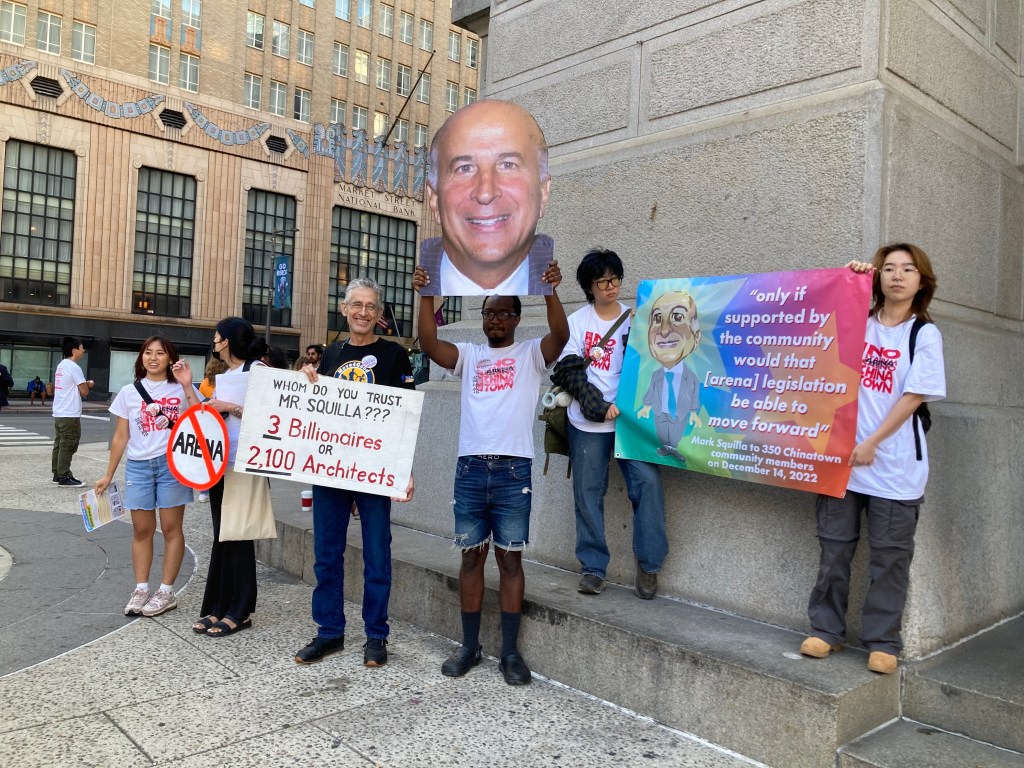
City Council will be back in session on September 5 and so will opponents of 76 Place. No Arena in Chinatown Solidarity will hold a press conference before they head up to the fourth floor of City Hall for their weekly City Council Watch.
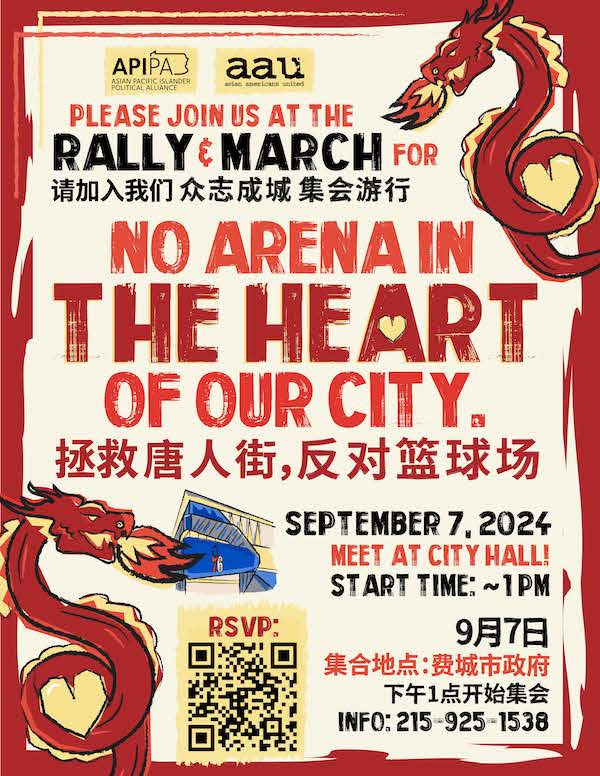
The Asian Pacific Islander Political Alliance and Asian Americans United will bring the fire on Saturday, September 7 at a rally and march. In an Instagram post, Asian Americans United wrote:
We’ll rally with voices from diverse Philly neighborhoods then march into Chinatown with the power of the people!
Chinatown, South Philly, West Philly, North Philly, Northwest and Northeast, let’s all come together and tell the developers: MOVE ON! Stop pushing the arena onto communities that don’t want it.
Teachers, doctors, nurses, small business owners, union members, people of faith, students, we all don’t want it! Philadelphia needs a government that spends its time on what the people need, not what billionaires want!
The rally and march will kick off on Saturday, September 7 at 1 p.m.
The City of Philadelphia released the long-awaited studies on the impact of the Philadelphia 76ers’ proposal to build a basketball arena in Center City today, August 26, 2024. The studies were paid for by the Sixers’ development team, 76 DevCo. The City claims the “developer had no further involvement and PIDC and the City retained all control over selection and management of the consultants.”
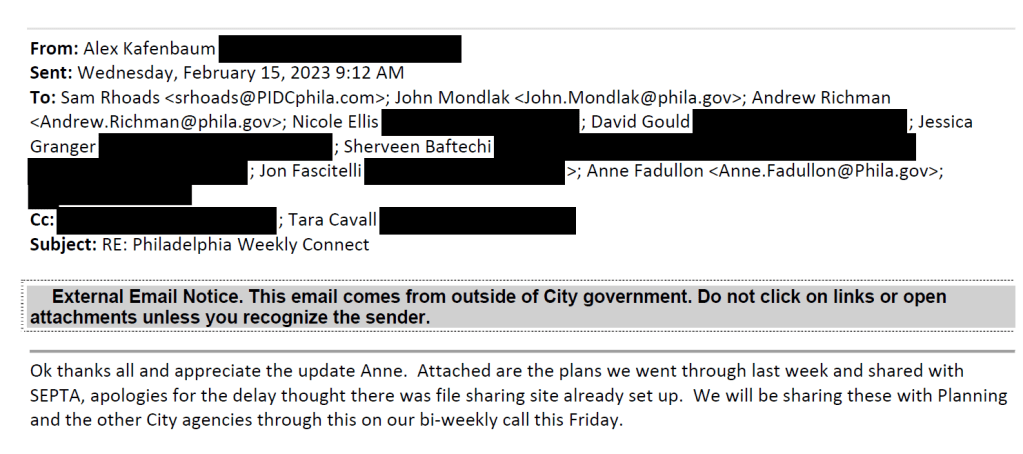
There was no need for the developer (read: 76 DevCo) to be further involved since records received in response to my Right-To-Know Law requests show 76 DevCo representatives have been in constant communication with PIDC and City officials and employees since April 2022.
While I have just begun to read the economic impact report, I have read the literature on sports facilities and their economic impact – and watched John Oliver.
Prof. John Charles Bradbury, a leading authority on the economic impact of sports venues, recently posted this image on X/Twitter.
I am a grown woman. Bradbury’s image is worth more than the 73-page “New Sixers Arena: Incremental Event Economic Impact Analysis.” The report was submitted to Sam Rhoads, executive vice president of the Philadelphia Industrial Development Corporation (PIDC). Rhoads convened weekly meetings with the developer.
The public is invited to share “constructive feedback” here. I’ll share my comments at the public hearings on the reports.
It should be noted the Sixers’ public transit-oriented project needs more than the approval of Mayor Cherelle Parker and City Council. The City of Philadelphia could green-light the project but SEPTA must approve building the arena atop Jefferson Station. My open records requests show SEPTA officials were also in constant communication with 76 DevCo representatives since April 2022. SEPTA is on board but the agency is facing a fiscal cliff and oversight by the Federal Transit Administration.





 PHL Watchdog