Harriet Tubman began her journey to freedom on Monday, September 17, 1849.
On Monday, September 15, 2025, the Washington Post reported on President Trump’s plan to whitewash the everyday brutality of slavery, including removing the photograph of self-emancipated Peter from Fort Pulaski National Monument in Georgia. The photograph of “a typical Negro” was first published in Harper’s Weekly on July 4, 1863.
Abolitionists used the iconic photograph to raise awareness of “how bad slavery was.” I recently viewed an original print of “The Scourged Back” at the Metropolitan Museum of Art.
According to the Post, interpretive panels at the President’s House have been flagged for removal:
In his executive order, Trump singled out the “corrosive ideology” at Philadelphia’s Independence National Historical Park, where the founders signed the Declaration of Independence.
…
“This is not just a handful of signs that tell the story of slavery,” said Ed Stierli, senior Mid-Atlantic regional director at the advocacy group National Parks Conservation Association. “This is a place that tells the complete story not just of slavery in America, but what it was like for those who were enslaved by George Washington.”
Trying to extricate slavery from the President’s House exhibit would fundamentally change the nature of the site, said Cindy MacLeod, who was superintendent of Independence National Historical Park for 15 years until 2023.
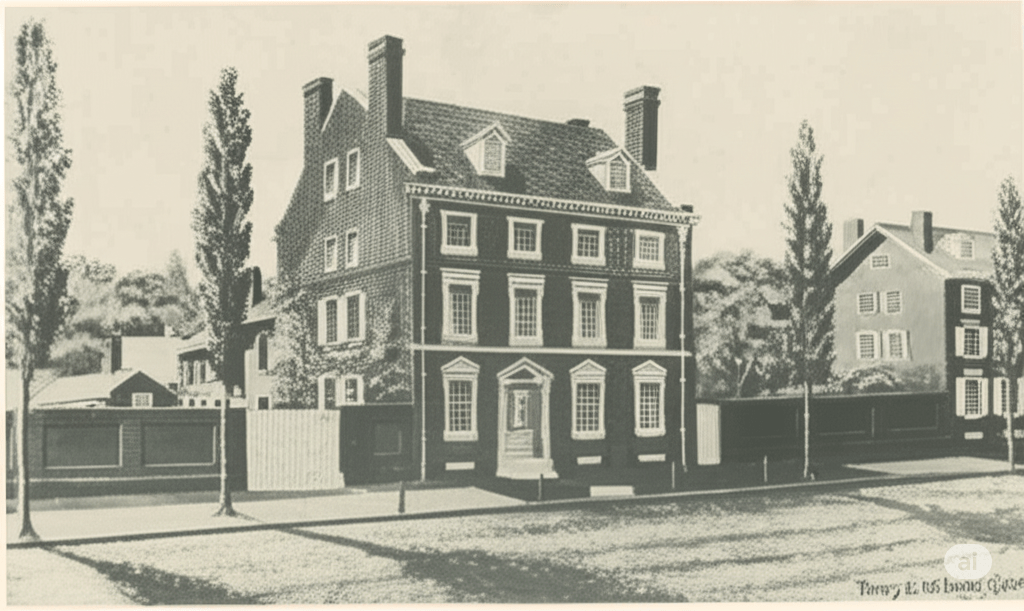
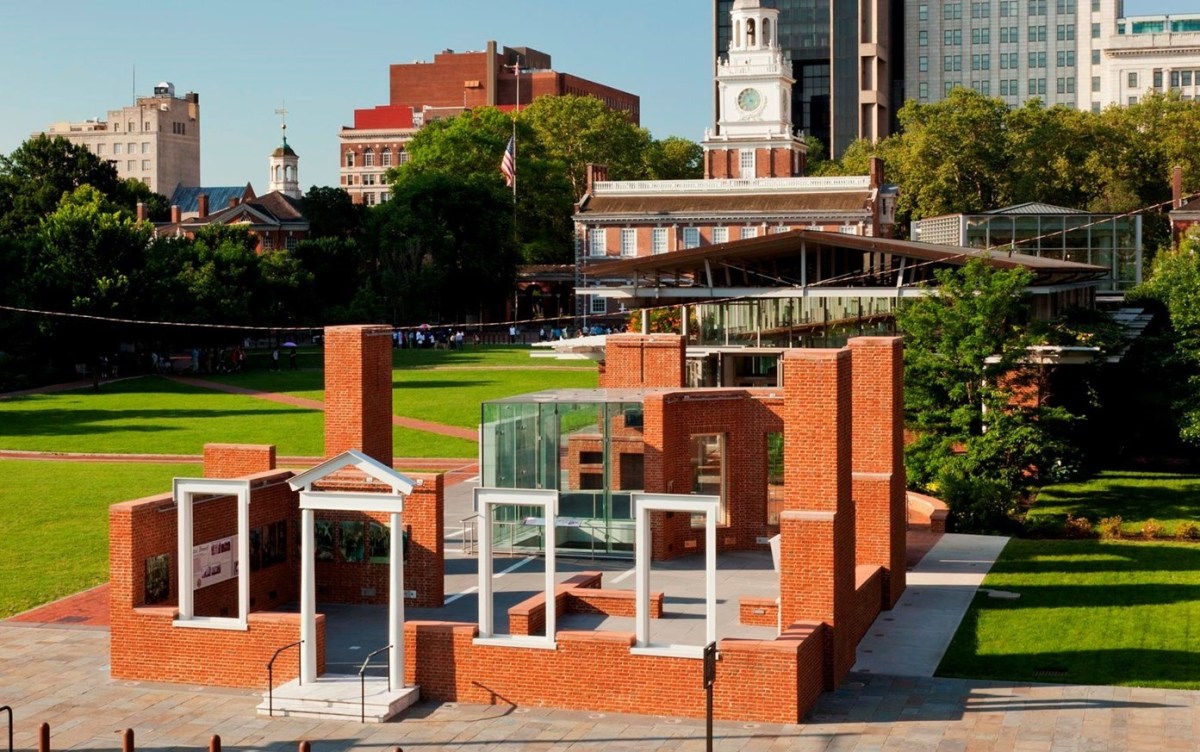
For more than 200 years, the nine enslaved people who lived in the Executive Mansion, located at 190 High (Market) Street in Philadelphia, were erased from history. This lost history was uncovered in 2002 and memorialized in the President’s House. The National Park Service site opened on December 15, 2010.
The story of slavery in the shadow of the Liberty Bell was whitewashed from the centennial, sesquicentennial and bicentennial celebrations of the signing of the Declaration of Independence.
For the Semiquincentennial, we will breathe life into President George Washington’s enslaved workers and say their names – Austin, Christopher, Giles, Hercules, Joe, Moll, Ona, Paris and Richmond – with joy.
The Daughters of the American Revolution sponsored the George Washington House, aka the President’s House.
The “High Street” exhibit included period-accurate reenactors. The exhibit presented an idealized view of the Revolutionary era. The existence of slavery in the Executive Mansion was left out of the history of 190 High Street.
In 2026, a group of activists, architects, technologists and historians will digitally reconstruct the original President’s House and outbuildings.
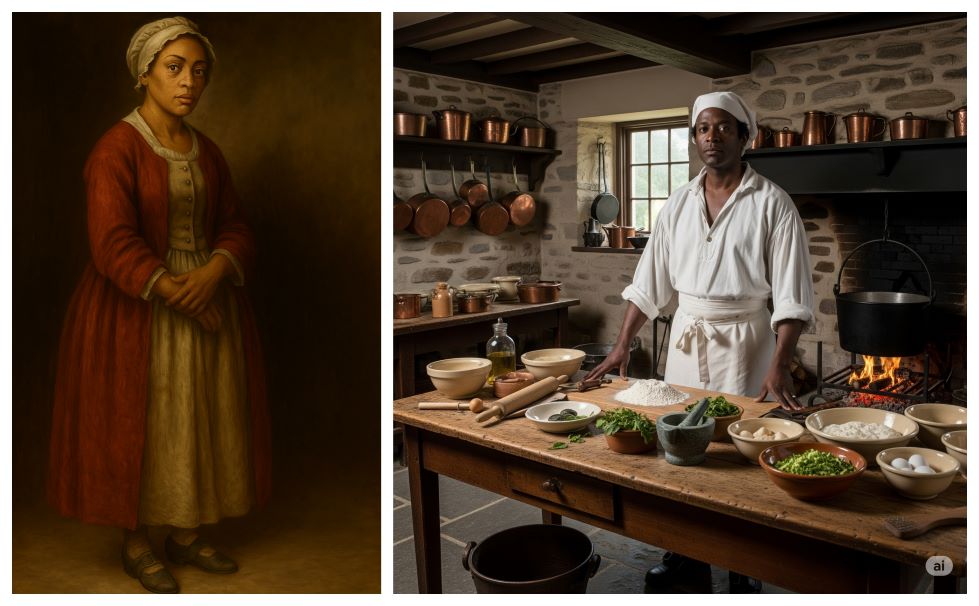
Instead of reenactors, we will create period-accurate AI avatars of the nine Black people enslaved by President Washington, including his chief cook, Hercules Posey.
In his book, Recollections and Private Memoirs of the Life and Character of Washington, George Washington Parke Custis, the president’s step-grandson, gave a detailed description of an outfit that Hercules wore:
While the masters of the republic were engaged in discussing the savory viands of the Congress dinner, the chief cook retired to make his toilet for an evening promenade. His perquisites from the slops of the kitchen were from one to two hundred dollars a year. Though homely in person, he lavished the most of these large avails upon dress. In making his toilet his linen was of unexceptionable whiteness and quality, then black silk shorts, ditto waistcoat, ditto stockings, shoes highly polished, with large buckles covering a considerable part of the foot, blue cloth coat with velvet collar and bright metal buttons, a long watch-chain dangling from his fob, a cocked-hat, and gold-headed cane completed the grand costume of the celebrated dandy (for there were dandies in those days) of the president’s kitchen.
Custis recalled “the chief cook invariably passed out at the front door.”
The President’s House.ai is currently in development. For more information or to get involved, contact Project Director Faye Anderson at presidentshouseAI@gmail.com.
The President’s House: Freedom and Slavery in the Making of a New Nation, an open-air installation, was dedicated on December 15, 2010. The National Park Service site pays homage to the nine enslaved people in the household of President George Washington – Austin, Christopher Sheels, Giles, Hercules, Joe, Moll, Oney Judge, Paris and Richmond.
The President’s House at Independence National Historical Park was born out of protest.
In a sign of the times, the President’s House is in the crosshairs of President Trump who wants to sugarcoat and whitewash American history. The Philadelphia Inquirer reports the site has been flagged for content review:
The President’s House Site, where Presidents George Washington and John Adams once lived, came under particular scrutiny with six exhibits flagged for review. The exhibit focuses on the contradictory coexistence of liberty and slavery during the founding of America and memorializes the people Washington enslaved.
For instance, park staff commented on a display titled “Life Under Slavery,” flagging that it “speaks of whipping, depriving of food, clothing, and shelter; as well as beating, torturing, and raping those they enslaved.”
[…]
Thirteen specific items spread across six exhibits at the site were identified for review.
This includes components of displays titled: “Life Under Slavery,” “History Lost & Found,” “The Executive Branch,” “The Dirty Business of Slavery,” “The House and the People Who Worked & Lived In It,” and an illustration with the words “An Act respecting fugitives from Justice,” in reference to Washington’s signing of the Fugitive Slave Act, according to an internal form, reviewed by The Inquirer, where employees were directed to submit their reviews.
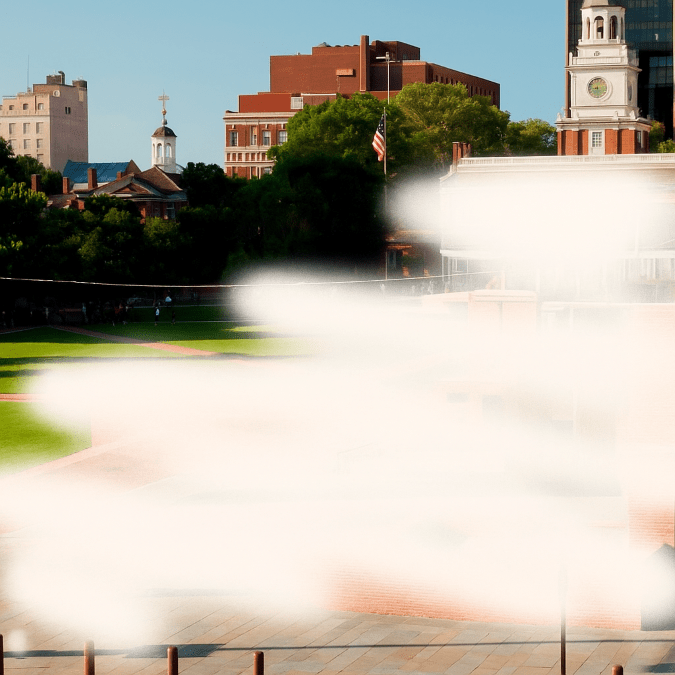
In 2002, the NPS had planned to ignore the full and accurate history of the site. The Liberty Bell Center, then-under construction, is in the footprint of President Washington’s slave quarters (circled).
Attorney Michael Coard, a founder of Avenging The Ancestors Coalition, was a member of the President’s House Project Oversight Committee which oversaw development and construction of the site. Coard led the charge to tell the full story.
We will resist any attempt to erase the complicated history of this memory site.
As we protest to preserve the physical structure and interpretive panels, we also will use digital technologies and 3D modeling to reconstruct the President’s House and outbuildings without constraint or compromise.
The President’s House.ai will be accessible to visitors on any device or browser anywhere in the world.
We will create AI-generated avatars of the nine African descendants enslaved by President Washington, including Ona Judge (1773-1848) and Hercules Posey (1748-1812).
Visitors to the President’s House.ai will be able to hold real-time conversations with the AI ancestors. The avatars’ training will be grounded in trusted primary and secondary sources.
AI Ona will spill the tea on how she escaped from bondage.
President Washington placed an advertisement in the May 24, 1796 edition of The Philadelphia Gazette and Universal Daily Advertiser offering a $10 reward (roughly $365 today) for the capture of Oney Judge.
As activists, historians, architects and technologists resist President Trump’s efforts to censor uncomfortable truths, the witless president unwittingly triggered the Streisand Effect.







 PHL Watchdog