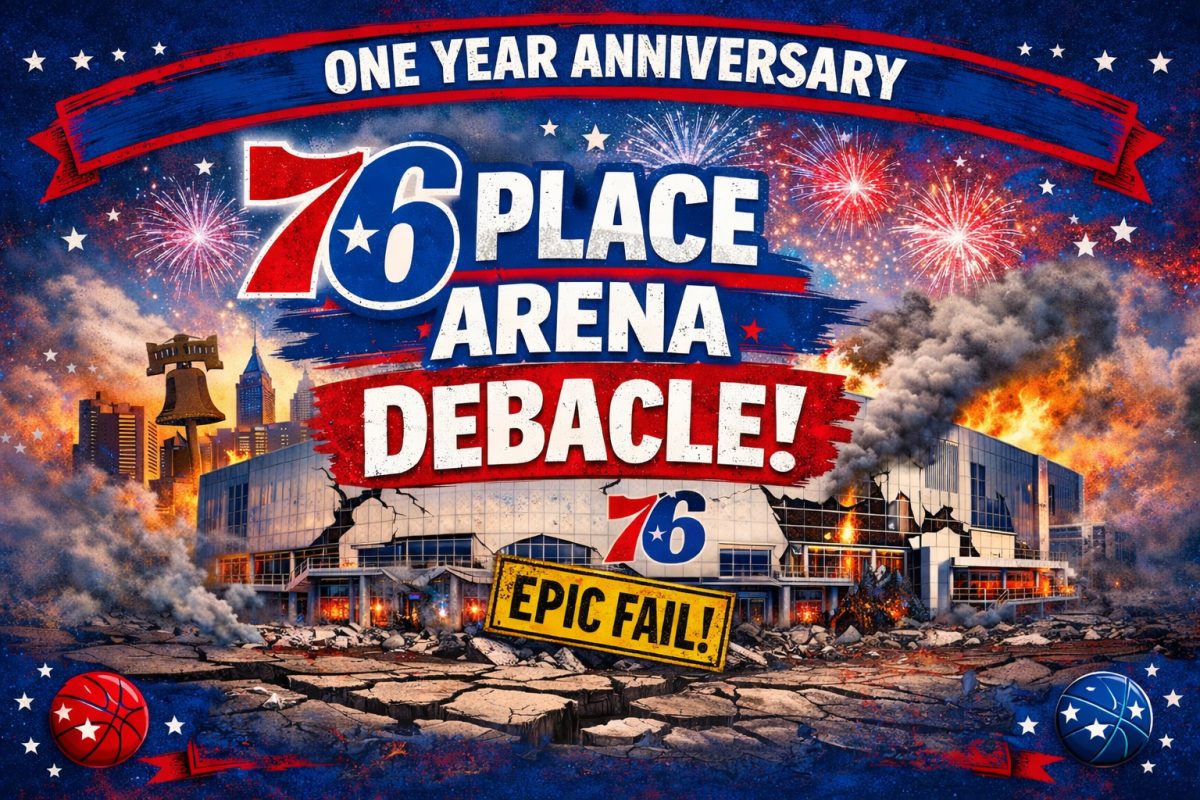
One year ago this week, the billionaire owners of the Philadelphia 76ers pulled the rug out from under Mayor Cherelle L. Parker and City Council. Their proposal to construct a basketball arena atop SEPTA’s Jefferson Station was a dream for the billionaires and a nightmare for everyone else.
A year later, we don’t have answers about this debacle. The City is still fighting release of documents that I requested from the previous administration.
SEPTA was twice ordered to turn over records. Rather than comply with the orders, the cash-strapped agency continued to pay outside counsel to fight disclosure. With their back against the wall, SEPTA claimed the records were deleted.
In this new year, I will submit new RTKL requests for 76 Place records for the period of January 1, 2024 to January 14, 2025. I will keep on pushing until we get answers to how the billionaires hijacked the public policymaking process.
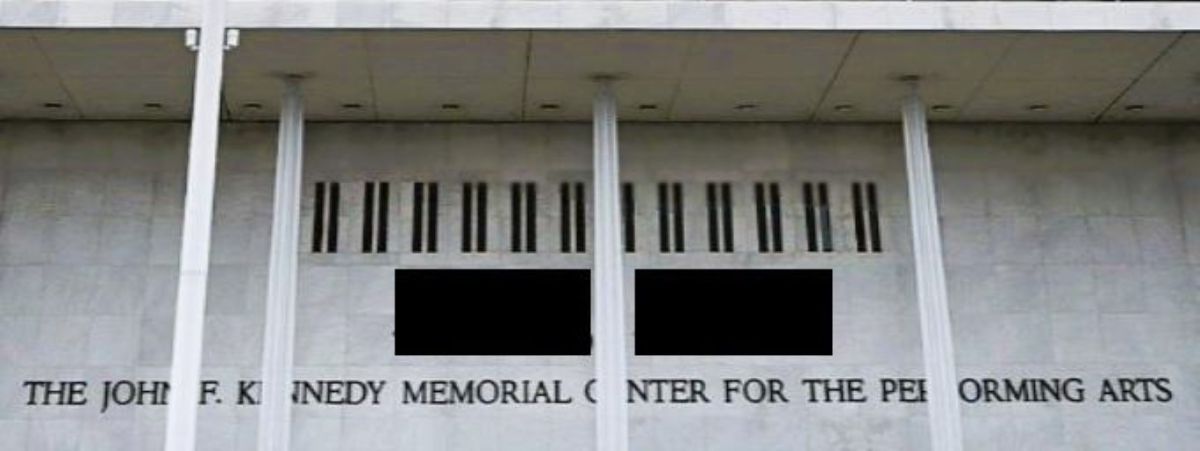
Donald Trump’s first year back in the White House was an annus horribilis. As the curtain was falling on 2025, President Trump’s handpicked Board of Trustees slapped his name on the John F. Kennedy Center for the Performing Arts. The Trump-stacked board changed the bylaws to allow only his sycophants to vote on the name change. Trump’s name on the building desecrates the living memorial to the 35th President of the United States.
By law, “no additional memorials or plaques in the nature of memorials shall be designated or installed in the public areas of the John F. Kennedy Center for the Performing Arts.” The illegal renaming prompted jazz drummer and vibraphonist Chuck Redd to cancel his Christmas Eve concert.
In a letter to Redd, Kennedy Center President Richard Grenell wrote this is “your official notice that we will seek $1 million in damages from you for this political stunt.”
Redd should call Grenell’s bluff. He would not have to worry about legal fees. Requests for donations to his legal defense fund would break the internet. It’s laughable to think the Kennedy Center would seek $1 million in damages for the cancellation of a free concert. There were no ticket sales; there were reservations. Through the discovery process, Redd would gain access to Board minutes and financial records.
Courage is contagious. Fall of Freedom is giving way to Winter of Discontent at the Kennedy Center. Shortly after Trump installed himself as chairman, “Hamilton” canceled its 2026 run at the storied art and culture institution.
The Cookers cancelled their New Year’s Eve concerts. The band’s drummer, Billy Hart, told the New York Times “the center’s name change had ‘evidently’ played a role” in the cancellation.
In canceling their gigs, Redd, the Cookers and the cast of “Hamilton” are following in the footsteps of the legendary citizen artists featured in the Kennedy Center’s immersive exhibit, “Art and Ideals.”
At the 1964 Berlin Jazz Festival, Dr. Martin Luther King Jr. observed that jazz musicians were the vanguard of the Civil Rights Movement. In a statement posted on their website, the Cookers said:
Jazz was born from struggle and from a relentless insistence on freedom: freedom of thought, of expression, and of the full human voice. Some of us have been making this music for many decades, and that history still shapes us. We are not turning away from our audience, and do want to make sure that when we do return to the bandstand, the room is able to celebrate the full presence of the music and everyone in it.
NEA Jazz Master Billy Taylor was artistic director at the Kennedy Center from 1994 until his death in 2010. Dr. Taylor’s composition, “I Wish I Knew How It Would Feel to Be Free,” was an unofficial anthem of the Civil Rights Movement.
Redd’s canceled concert was to be held on the Millennium Stage. The Billy Taylor Trio inaugurated the Millennium Stage on March 1, 1997.
As long as Trump’s name is on the wall, jazz musicians should not set foot in the building. The only jazz should be live from the archives, Billy Taylor’s Jazz at the Kennedy Center (here and here).
UPDATE: Jazz trumpeter and violinist Wayne Tucker canceled his January 22, 2026 concert which was scheduled for the Millennium Stage.
Master silhouette artist Moses Wlliams passed away on December 13, 1830. Born into slavery in August 1776, Moses lived in the shadow of his enslaver, Charles Willson Peale. Moses grew up in the same household with Peale’s children, but he was denied the opportunity to learn the fine art of painting that was afforded his enslaver’s children.
Moses made a way out of no way. He excelled as a silhouette artist and earned a place in history. Moses’ Pennsylvania historical marker will be dedicated in 2026, the 250th anniversary of his birth.
Moses was interred at Northwest Burial Ground on December 20, 1830. Sometime between 1853 and 1868, the burial ground was sold, the bodies disinterred, and a church constructed on the site. Some of the remains were removed to Section 203 at Mount Moriah Cemetery in 1868 under a monument that reads: “Sacred to the memory of the dead whose remains were removed from the 16th and Coates St. Cemetery of St. Georges M. E. Church Philadelphia to this place in the year 1868.”
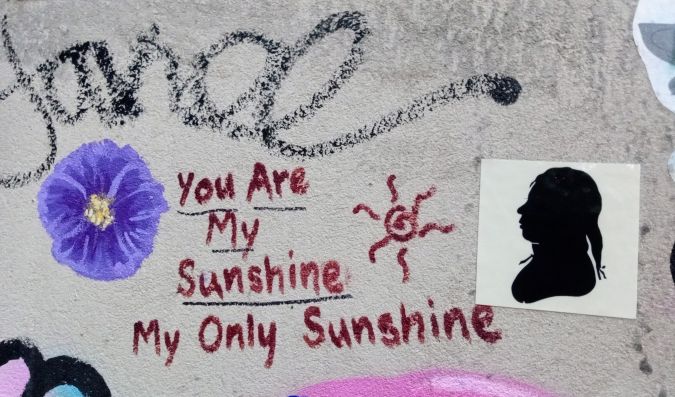
Mount Moriah has no record that Moses’ remains were among those reinterred in Section 203. In the absence of a final resting place, All That Philly Jazz Director Faye Anderson plastered the only known image of Moses in Freeman Alley, a graffitied place of remembrance in New York City.
Pasting over others’ stickers is part of the culture of Freeman Alley.
When Moses Williams’ historical marker is unveiled in 2026, he will have a permanent place in public memory.
The dedication ceremony is open to the public. If you are interested in attending, send your name and email address to phillyjazzapp@gmail.com.
A few days before Fall of Freedom walking tour of Billie Holiday’s Philadelphia, the Philadelphia Inquirer published All That Philly Jazz Director Faye Anderson’s opinion piece in which she wrote:
No artist has met the moment with more courage than Lady Day, whose 1939 recording of “Strange Fruit” was named song of the century by Time magazine in 1999, and was added to the National Recording Registry in 2002.
“Strange Fruit” is a timeless and empowering act of creative resistance
While Holiday is sui generis, jazz musicians were the vanguard of the civil rights movement.
At so-called black and tan clubs like the Down Beat and the Blue Note, Black and white people intermingled on an equal basis for the first time.
Jazz clubs were constantly harassed by Philadelphia police led by vice squad Capt. Clarence Ferguson and his protégé, Inspector Frank Rizzo. The nightspots became battlegrounds in the struggle for racial justice. Jazz musicians’ unbowed demeanor fashioned a new racial identity
[…]
Courage is contagious. When we gather on South Broad, we are the resistance.
In collaboration with Scribe Video Center, the walking tour began at the Academy of Music where Billie had several engagements, including on May 6, 1946.
We stopped at the former location of the Radnor Hotel, a Green Book site, where Billie and her husband-manager, Louis McKay, were arrested on February 23, 1956. The raid was led by Captain Clarence Ferguson of the Philadelphia Police vice squad. The arrest is depicted in the biopic United States vs. Billie Holiday.
The penultimate stop was the site of Emerson’s Tavern, the jazz club where Billie last performed in Philadelphia. Emerson’s is the setting for the Broadway play, “Lady Day at Emerson’s Bar and Grill.”
The walk and talk ended at the former Attucks Hotel where on May 15, 1947, Billie’s room was raided while she was performing at the Earle Theater. Billie got a heads-up and fled to New York City where three days later she was arrested. She was subsequently convicted of narcotics possession and sentenced to one year and one day. Billie served her time at Alderson Federal Prison Camp in West Virginia.
The following Monday, Faye plastered the sticker that was given to participants all over Freeman Alley, a graffitied place of remembrance on the Lower East Side. Freedman Alley is located about a mile from Café Society, the Greenwich Village jazz club where Billie first sang “Strange Fruit.”
In the participant feedback survey, Faye expressed her hope that Fall of Freedom would lead to Winter of Our Discontent and Freedom Summer.
Authoritarian regimes throughout history have targeted artists and cultural institutions. Early in his administration, President Trump issued an executive order that targeted the Smithsonian Institution.
Trump has taken over federal arts agencies and installed himself as chairman of the John F. Kennedy Center for the Performing Arts. He threatens to withhold federal funding from organizations that do not bend the knee.
Nina Simone said an artist’s duty is to reflect the times and the situations in which they find themselves.
Today, we find ourselves in a situation in which Trump wants to control the narrative.
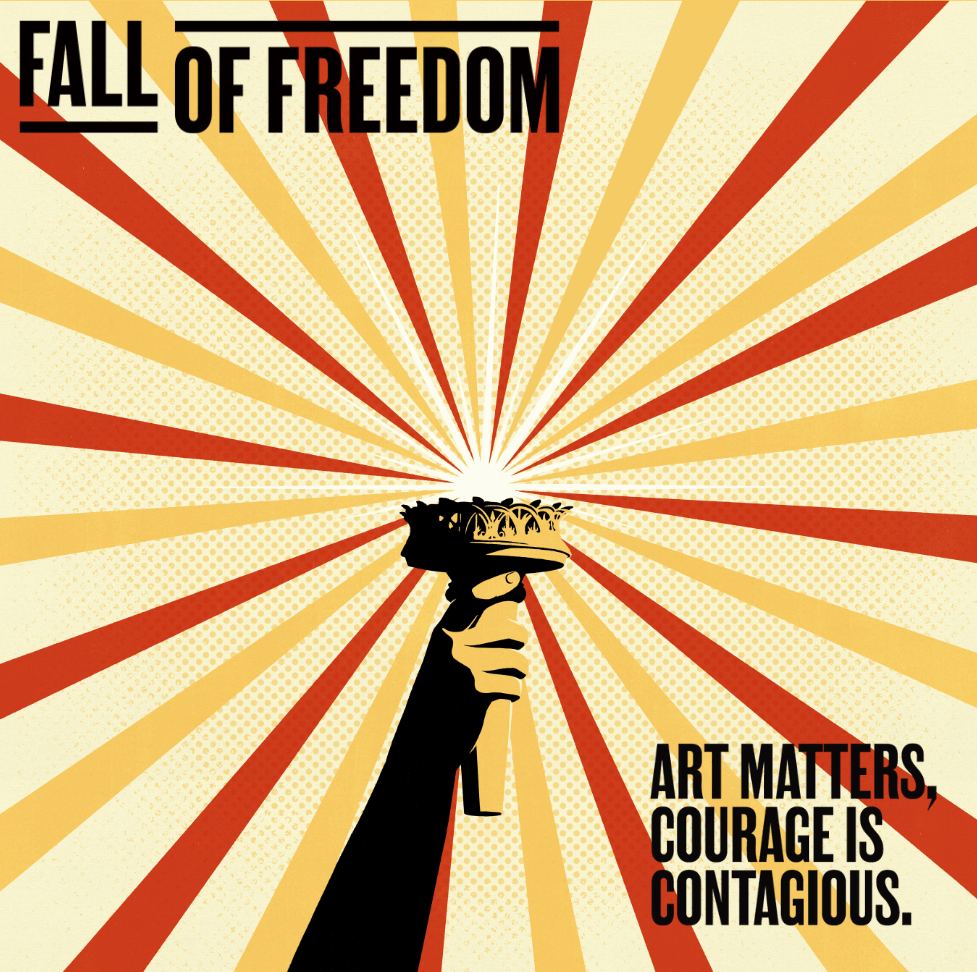
Fall of Freedom issued an urgent call to artists, creators and cultural workers to stand united against the assault on our constitutional rights and authoritarian control. Fall of Freedom is a celebration of art, courage, and free expression.
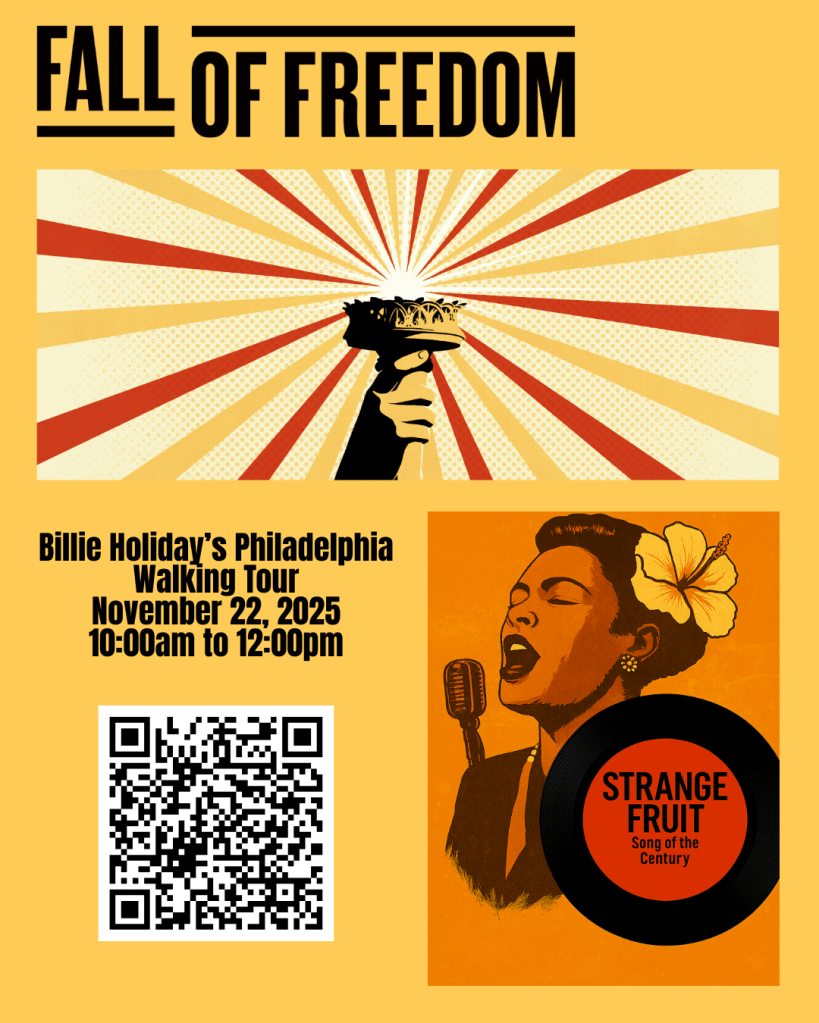
No artist reflected the times more courageously than Billie Holiday whose recording of “Strange Fruit” was named Song of the Century by Time magazine in 1999 and included in the National Recording Registry in 2002.
The walking tour will be guided by All That Philly Jazz Director Faye Anderson whose advocacy led to Billie’s induction into the Philadelphia Walk of Fame. We will visit the venues where Billie sang, the hotels where she stayed, and the site of the jazz club immortalized in the Tony Award®-winning “Lady Day at Emerson’s Bar and Grill.”
Along the way, we will stop at places connected to Nina Simone and Paul Robeson, artists who, like Billie, used their voices to speak truth to power.
The event is free and open to all, but registration is required. To reserve your spot, scan the QR code or go here.
Art matters. Courage is contagious. We are the resistance.
This time last year, the billionaire owners of the Sixers were going hard for a new basketball arena on East Market Street. 76 Place was a public transit-oriented project hitched to a beleaguered public transit agency. Then as now, SEPTA is facing a fiscal cliff. U.S. Transportation Secretary Sean Duffy is threatening to push the mismanaged agency over the cliff.
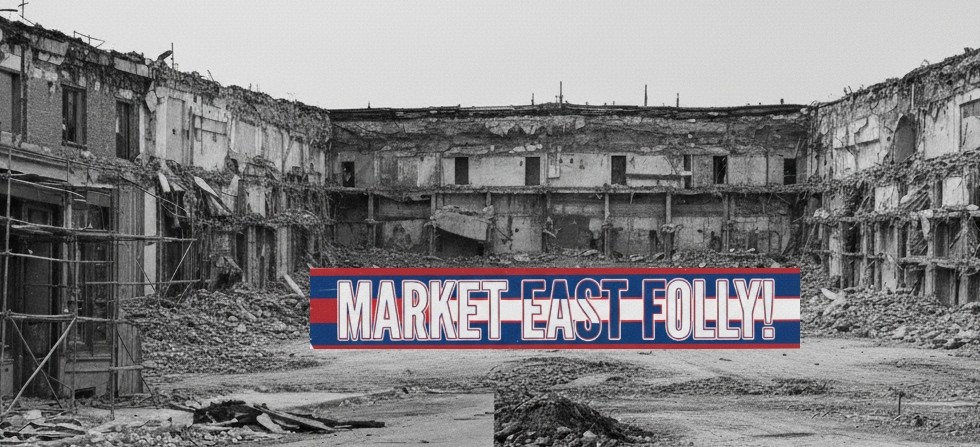
Market East has been in decline for decades. Empty storefronts line the once thriving shopping district. The Sixers and their new bestie, Comcast, plan to demolish buildings and build, well, nothing. The Philadelphia Inquirer reported:
The companies that own the 76ers and Flyers earlier this year made a high-profile commitment to help transform the long-distressed East Market Street corridor.
The first development to come out of that promise? Perhaps a mini-soccer pitch. Or a pop-up beer garden.
The teams recently hired a contractor to demolish buildings they own on the 1000-block of the beleaguered thoroughfare with the goal of eventually erecting a major development that could help revitalize the area.
But, until then, City Councilmember Mark Squilla said Friday the teams and city leaders hope to “activate” the lots slated for demolition with “pop-up” opportunities related to the FIFA World Cup and the nation’s 250th birthday being hosted in Philadelphia next summer.
The Sixers and Comcast’s development plan to shoot first and aim later was shot down by the Design Advocacy Group:
In the meantime, the sports teams that now own many buildings on the 900 and 1000 blocks of Market Street are already planning to begin tearing them down with nothing more in mind than a “pop up” beer garden or miniature soccer field.
If popups are wanted by FIFA and the 250th, Market Street already has large demolition sites—the surface parking lot at 13th and Market and the gigantic “Disney Hole” at 8th and Market. Not far away is the gaping void on Jewelers Row, a cautionary tale about premature demolition. These places remind us of past failures where rushed demolition yielded no replacement.
Of course, Market Street needs dressing up in time for the flood of visitors we look forward to in 2026. And pop-ups on existing empty sites should be part of that. But it makes no sense to stage such impulsive demolition on Market Street to create spaces we don’t need now for the not yet planned projects that may come next.
UPDATE: The Philadelphia Inquirer Architecture Critic Inga Saffron doesn’t trust the Sixers and Comcast’s process:
The long-awaited effort to reinvent Market East began in the same bombshell manner as the Sixers’ arena proposal did three years ago — with no transparency and no planning.
First, the two new BFFs of the Philadelphia sports world — the Sixers and Comcast — blindsided Mayor Cherelle L. Parker (and the rest of us) by announcing that they intended to raze several buildings on the 1000 block of Market Street, an area covering half the block. As for what they would put in their place, well, they’ll get back to us on that.
This has to be the worst idea for fixing Market Street’s woes since the last bad idea: the Sixers basketball arena.









 PHL Watchdog