
The President’s House.ai

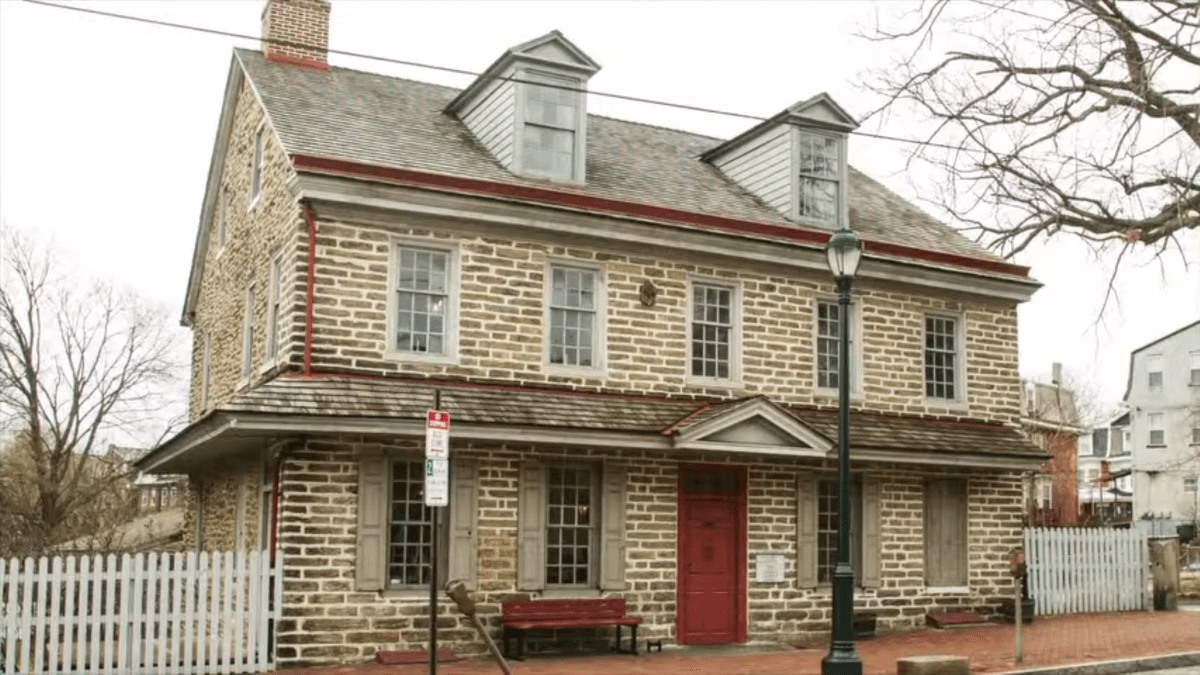
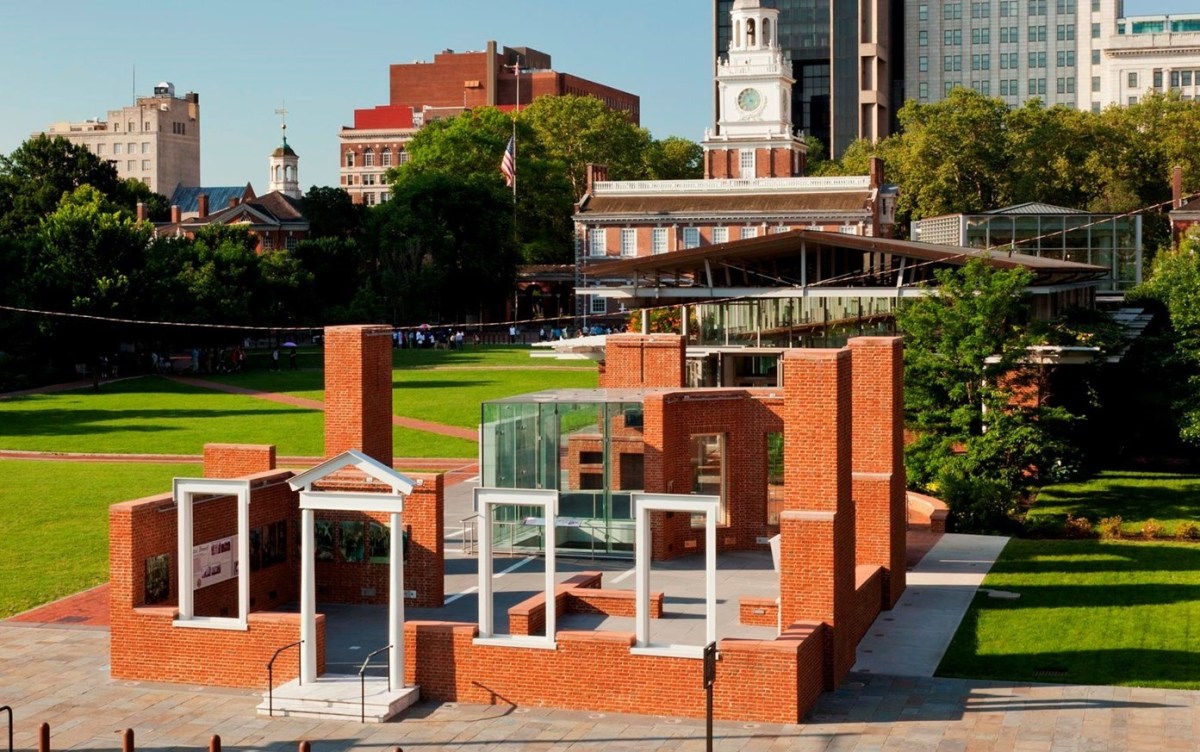
For more than 200 years, the nine enslaved people who lived in the Executive Mansion, located at 190 High (Market) Street in Philadelphia, were erased from history. This lost history was uncovered in 2002 and memorialized in the President’s House. The National Park Service site opened on December 15, 2010.

The story of slavery in the shadow of the Liberty Bell was whitewashed from the centennial, sesquicentennial and bicentennial celebrations of the signing of the Declaration of Independence.

For the Semiquincentennial, we will breathe life into President George Washington’s enslaved workers and say their names – Austin, Christopher, Giles, Hercules, Joe, Moll, Ona, Paris and Richmond – with joy.

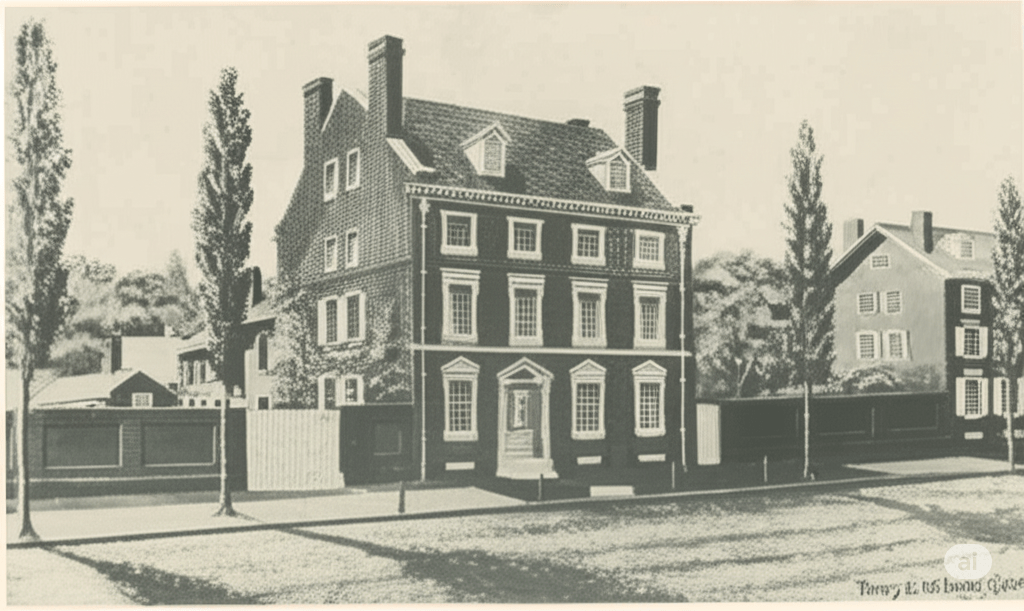
In 1926, a group of women, the Women’s Committee of the Philadelphia Sesqui-Centennial International Exposition, reconstructed Revolutionary era buildings on the fairgrounds in South Philadelphia.

The Daughters of the American Revolution sponsored the George Washington House, aka the President’s House.

The “High Street” exhibit included period-accurate reenactors. The exhibit presented an idealized view of the Revolutionary era. The existence of slavery in the Executive Mansion was left out of the history of 190 High Street.

In 2026, a group of activists, architects, technologists and historians will digitally reconstruct the original President’s House and outbuildings.

Instead of reenactors, we will create period-accurate AI avatars of the nine Black people enslaved by President Washington, including his chief cook, Hercules Posey.

In his book, Recollections and Private Memoirs of the Life and Character of Washington, George Washington Parke Custis, the president’s step-grandson, gave a detailed description of an outfit that Hercules wore:

While the masters of the republic were engaged in discussing the savory viands of the Congress dinner, the chief cook retired to make his toilet for an evening promenade. His perquisites from the slops of the kitchen were from one to two hundred dollars a year. Though homely in person, he lavished the most of these large avails upon dress. In making his toilet his linen was of unexceptionable whiteness and quality, then black silk shorts, ditto waistcoat, ditto stockings, shoes highly polished, with large buckles covering a considerable part of the foot, blue cloth coat with velvet collar and bright metal buttons, a long watch-chain dangling from his fob, a cocked-hat, and gold-headed cane completed the grand costume of the celebrated dandy (for there were dandies in those days) of the president’s kitchen.

Custis recalled “the chief cook invariably passed out at the front door.”

The President’s House.ai is currently in development. For more information or to get involved, contact Project Director Faye Anderson at presidentshouseAI@gmail.com.

President Trump’s ‘Truth’ Echoes 1984

In my recent opinion piece published in the Philadelphia Inquirer, I wrote: “The review of content at the President’s House is an Orwellian descent into censorship. It’s interpretive panels and books today. Will it be National Park Service videos and trading cards tomorrow?

Two days later, President Trump applied new pressure on Smithsonian interpretive texts and exhibitions. The Washington Post reported that White House officials are conducting a comprehensive review of Smithsonian museums:

The White House will launch a sweeping review of Smithsonian exhibitions, collections and operations ahead of America’s 250th-birthday celebrations next year — the first time the Trump administration has detailed steps to scrutinize the institution, which officials say should reflect the president’s call to restore “truth and sanity” to American history.

The vetting process would include reviewing public-facing and online content, curatorial processes and guidelines, exhibition planning and collection use, according to a letter sent to Smithsonian Secretary Lonnie G. Bunch III on Tuesday and signed by White House senior associate Lindsey Halligan, Domestic Policy Council Director Vince Hale and White House Office of Management and Budget chief Russell Vought.

[…]

The letter states that the initial review will focus on eight museums: the National Museum of American History, the National Museum of Natural History, the National Museum of African American History and Culture, the National Museum of the American Indian, the National Air and Space Museum, the Smithsonian American Art Museum, the National Portrait Gallery and the Hirshhorn Museum and Sculpture Garden.

The American Association for State and Local History denounced the White House’s interference:

For nearly two centuries, the Smithsonian has served as a globally renowned model of scholarship and public engagement. Smithsonian museums and sites are beloved, trusted destinations for millions of visitors annually looking to gain knowledge, spark curiosity, and find connection. The administration is maligning the expertise and autonomy of an institution that represents the pinnacle of museum and scholarly practice.

This pressure on Smithsonian history museums, in particular, reveals the administration’s ambition to delegitimize the work of the history field and to rob the public of its ability to learn from the past. Sound historical practice depends upon meticulous research of a wide array of sources, open-minded embrace of complexity and ambiguity, and a willingness to update understandings as new information arises. Time and again, Americans have said that they want our country’s full story. Censoring and manipulating content to fit a predetermined, triumphalist narrative is the antithesis of historical practice and a disservice to us all.

Smithsonian exhibitions are grounded in scholarly research. The ahistorical, willfully ignorant Trump wants to impose his interpretation of American history.

Truth is, Trump knows little, if anything, about Black history. He thought Frederick Douglass was still alive in 2017.

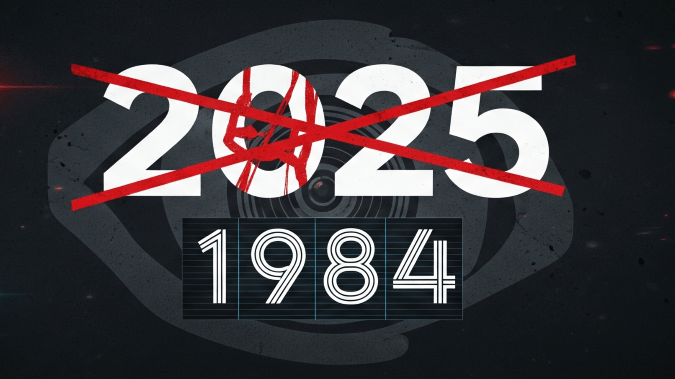
While gleaning clues from Project 2025, Trump’s whitewashing of American history is foretold in George Orwell’s 1984:

The Party told you to reject the evidence of your eyes and ears. It was their final, most essential command.

[…]

And if all others accepted the lie which the Party imposed—if all records told the same tale—then the lie passed into history and became truth.

Trump’s Big Lie that the Smithsonian had “come under the influence of a divisive, race-centered ideology” is straight out of the dictator’s playbook.

SEPTA Officials Deleted 76 Place Records

Although SEPTA is in a transit death spiral, the agency is wasting money on outside counsel fighting release of records related to the Philadelphia 76ers’ proposal to build an arena atop Jefferson Station.

I submitted a Right-To-Know Law request on August 1, 2023 for records related to 76 Place for the timeframe of April 1, 2022 to July 31, 2023. After losing before the Office of Open Records and the Commonwealth Court of Pennsylvania, SEPTA now claims more than seven gigabytes of data were deleted. Former CEO Leslie Richards and current CEO Scott Sauer deleted records related to the most controversial proposal in the transit agency’s history.

Richards left the cash-strapped agency in November 2024 but she’s still collecting a check from SEPTA.

It is said that those who can, do; those who can’t, teach. Fittingly, Richards is now teaching at the University of Pennsylvania. Penn recently announced that Richards received the 2025 Government Service Award from the Philadelphia chapter of the American Society of Civil Engineers.

In deleting 76 Place records, Richards did a disservice to the public. We have the right to know how SEPTA could have been stuck paying tens of millions of dollars for the Sixers billionaire owners’ now-abandoned vanity project.

SEPTA is Exhibit 1 as to why the Pennsylvania House of Representatives should pass Senate Bill 686, sponsored by Pennsylvania Senate State Government Committee Chairman Sen. Cris Dush. The legislation makes the intentional destruction or alteration of Right-To-Know Law records a third-degree felony.

Following passage of SB686, Sen. Dush said:

I find it deeply troubling that Pennsylvania’s long-standing RTK law mentions no criminal offense for destroying or altering records subject to a RTK request. Not surprisingly, the rule of law is entirely thwarted whenever government officials or their staff intentionally dispose or suppress records that have been requested under RTK provisions, and which the public has every right to examine.

Those who cannot handle the truth should not get away with criminally suppressing the truth. In short, the punishment for violating our Commonwealth’s RTK law must fit the crime. It’s well past time in Pennsylvania to balance the scales of justice against this preposterous ‘get-out-of-jail-free-card’ for the flagrant destruction of RTK records with a maximum third-degree felony conviction.

It is deeply troubling officials destroyed records knowing that if SEPTA approved 76 Place, lawsuits would fly.

What Are SEPTA and City of Philadelphia Hiding?

The Philadelphia 76ers abandoned their plan to build an arena atop SEPTA’s Jefferson Station. But SEPTA is still playing games to block disclosure of communications with the Sixers’ billionaire owners and their representatives.

SEPTA lost their appeal of the Office of Open Records’ Final Determination to the Commonwealth Court of Pennsylvania. The beleaguered transit agency was directed to conduct a good faith search for records responsive to my Right-To-Know Law request for, among other things, invoices, reports, feasibility studies, traffic impact studies, architectural designs and cost estimates.

In a sworn statement, Allison DeMatteo, SEPTA’s Manager of Records and Information, claimed her search using the keywords “76 Place” and “76 Devcorp” returned 7.60 gigabytes of data, including 5.71 gigabytes of email.

According to ChatGPT, one gigabyte of email data is roughly 100,000 pages. As of this writing, SEPTA has produced 30 records.

Meanwhile, the City of Philadelphia has petitioned the OOR to reconsider its final determination, dated May 30, 2025. The OOR should tell the City: We said what we said. “[T]he appeal is granted in part and denied in part, and the City is required to provide unredacted responsive records, as designated in this Final Determination, to the Requester within thirty days.”

UPDATE: Office of Open Records Deputy Chief Counsel Kathleen A. Higgins to the City of Philadelphia: The Petition is DENIED:

Therefore, after a review of the complete appeal file, including the Final Determination Upon Remand and the arguments set forth in the Petition, the record indicates that all evidence and submissions before the OOR were considered and given proper weight, and as a result, I cannot conclude that the Appeals Officer committed an error of law or an abuse of discretion. Accordingly, the Petition is DENIED.

In other words, the City of Philadelphia got to give it up.

SEPTA Ordered to Give Up 76 Place Documents — Again

On August 1, 2023, I filed a Right-To-Know Law request for records related to the Sixers’ now-abandoned proposal to build a basketball arena atop Jefferson Station. SEPTA denied the request, claiming the entirety of my Request was “insufficiently specific.”

I appealed the denial to the Pennsylvania Office of Open Records. The OOR determined that several Items were sufficiently specific and ordered SEPTA to conduct a good faith search for the records on December 20, 2023.

Rather than comply with the OOR’s final determination, the cash-strapped public transit agency paid outside counsel to appeal the order to the Commonwealth Court of Pennsylvania.

On May 1, 2025, the Commonwealth Court affirmed the OOR’s findings, stating that my Request was sufficiently specific, in part. SEPTA was, again, directed to conduct a good faith search for records responsive to my Request for, among other things, invoices, reports, feasibility studies, traffic impact studies, architectural designs and cost estimates.

​The Commonwealth Court effectively said game over. Like the 76ers playing in the second round of the NBA playoffs, SEPTA blew its chance to assert any exemptions from disclosure. SEPTA must give up 76 Place records.