This is Sunshine Week, a time to celebrate transparency, and the public’s right to know what government officials are doing and saying behind closed doors. PHL Watchdog is a Sunshine Week partner. It is serendipitous that I will be at City Hall in Courtroom 275 during Sunshine Week.
For more than two years, the City of Philadelphia has fought release of records related to the Philadelphia 76ers’ now abandoned proposal to build an arena atop SEPTA’s Jefferson Station. Perhaps the City thought I would give up. But giving up is not in my DNA. And an awesome team of lawyers, led by Paula Knudsen Burke of the Reporters Committee for Freedom of the Press and Temple University Law Professor Mary E. Levy, has my back.
The City appealed the Office of Open Records’ final determination to turn over responsive records to the Court of Common Pleas Philadelphia County on June 27, 2025. Judge Christopher Hall will hear oral arguments on March 18, 2026.
While 76 Place is as dead as the 76ers’ chances of winning an NBA championship, the public has the right to know how unaccountable and self-serving billionaires hijacked city planning. The latest Market East fiasco shows that the City has learned nothing from the arena debacle.
It is imperative that public officials are held accountable. Transparency must undergird future development projects. So, let the sun shine in.
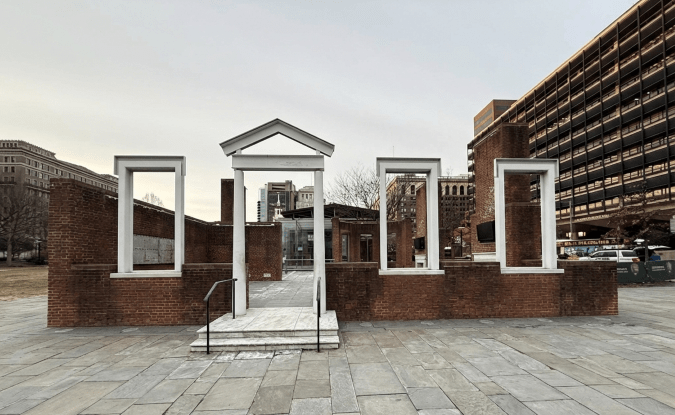
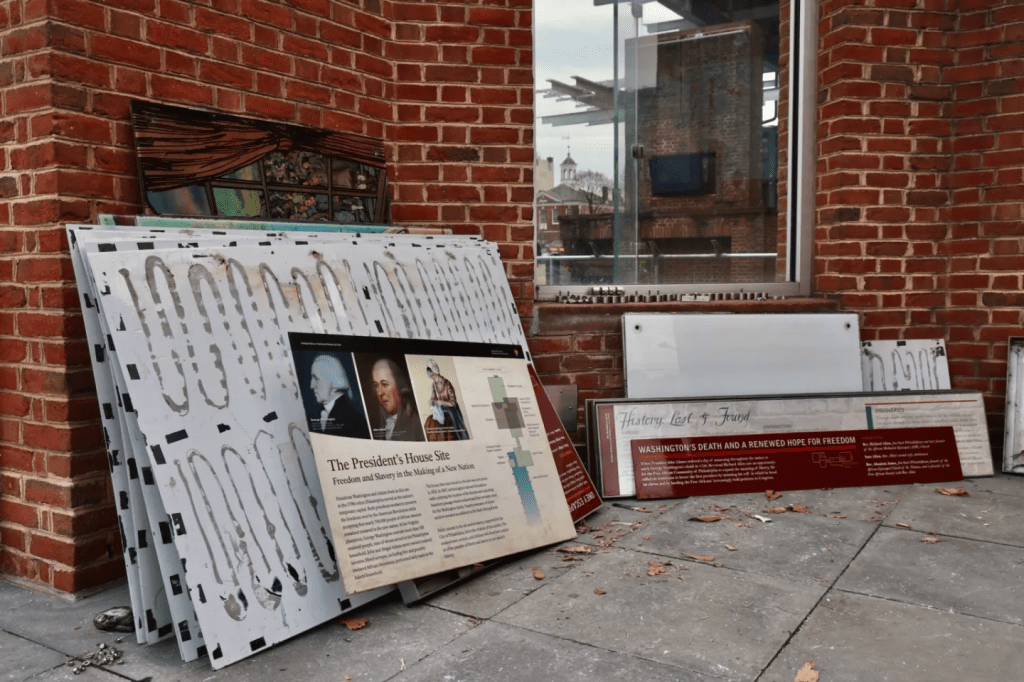
Invoking President Trump’s Executive Order, “Restoring Truth and Sanity to American History,” the National Park Service executed “a jarring alteration to the integrity of the [President’s House] site” on January 22, 2026.
On Washington’s Birthday, better known as Presidents’ Day, U.S. District Judge Cynthia Rufe rebuked President Trump’s claim to “the truth.” In her opinion granting the City of Philadelphia’s motion for a preliminary injunction, Judge Rufe invoked George Orwell:
And yet, in its argument, the government claims it alone has the power to erase, alter, remove and hide historical accounts on taxpayer and local government-funded monuments within its control. Its claims in this regard echo Big Brother’s domain in Orwell’s 1984, where:
The largest section of the [government’s] Records Department . . . consisted simply of persons whose duty it was to track down and collect all copies of books, newspapers, and other documents which had been superseded and were due for destruction. A number of the Times [a newspaper] which might, because of changes in political alignment, or mistaken prophesies uttered by Big Brother, have been rewritten a dozen times still stood on the files bearing its original date, and no other copy existed to contradict it. Books, also, were recalled and rewritten again and again, and were invariably reissued without any admission that any alteration had been made. Even the written instructions [for workers in the Records Department] . . . never stated or implied that an act of forgery was to be committed; always the reference was to slips, errors, misprints, or misquotations which it was necessary to put right in the interests of accuracy.
Much to his dismay, President Trump does not have the authority to dictate “the truth”:
The government here likewise asserts truth is no longer self-evident, but rather the property of the elected chief magistrate and his appointees and delegees, at his whim to be scraped clean, hidden, or overwritten. And why? Solely because, as Defendants state, it has the power.
Judge Rufe made it clear that she’s not telling the government what message to convey; rather, whatever message is conveyed at the President’s House Site must be done in consultation with the City:
The government can convey a different message without restraint elsewhere if it so pleases, but it cannot do so to the President’s House until it follows the law and consults with the City.
Judge Rufe ordered the Department of the Interior and the National Park Service to restore the President’s House Site to its physical status as of January 21, 2026 and “reinstall all panels, displays, and video exhibits that were previously in place.”
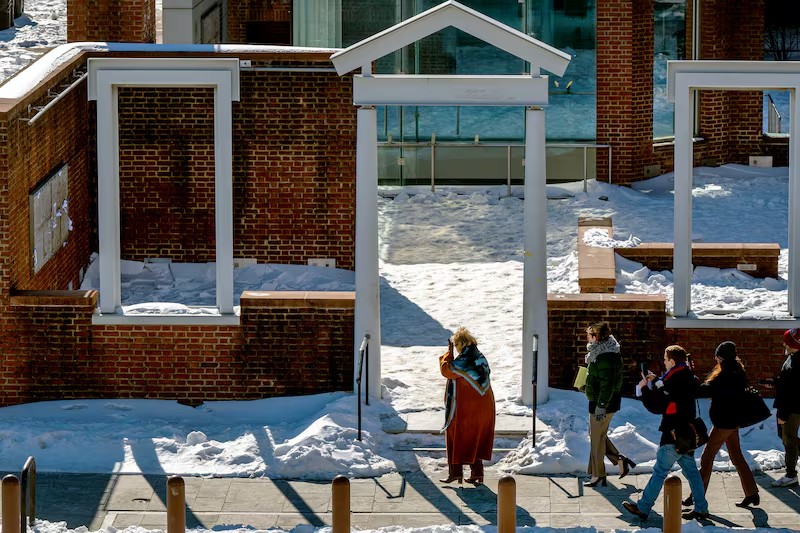
When Judge Rufe made a site visit, she saw that the Park Service cleared the snow on Independence Mall and left the President’s House Site covered in snow and ice.
Judge Rufe ordered the Defendants “to provide immediate, continuing, and proper maintenance to the Site, its exhibits, grounds [emphasis added], artifacts, video monitors, and recordings which SHALL remain operable.”
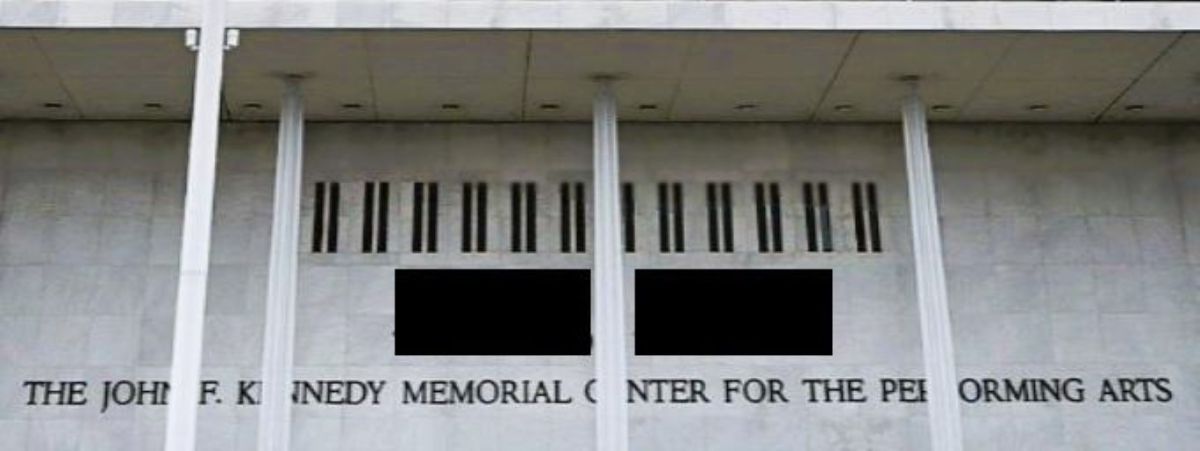
For the first time in decades, there are no Black History Month events at the Kennedy Center. The Washington Post reported:
As the calendar turns to February, many museums and cultural centers across the country are readying their programming for Black History Month. At the John F. Kennedy Center for the Performing Arts, however, the online calendar lists no scheduled events to honor Black History Month, following artist relocations and cancellations.
In the past, the national center for the arts has offered an array of programming keyed to the month-long celebration of Black history, including an annual concert and tributes to African American icons, such as D.C. native Duke Ellington. But the choirs that long performed those concerts moved their performances to other venues after President Donald Trump took over the Kennedy Center by purging its board of trustees last year, and it appears no other thematic programming was added in those events’ stead.
In a social media post on the first day of Black History Month, Trump, chairman of the Kennedy Center, proposed closing the storied venue for “Construction, Revitalization, and Complete Rebuilding” for two years, starting on July 4, 2026.
I have determined that The Trump Kennedy Center, if temporarily closed for Construction, Revitalization, and Complete Rebuilding, can be, without question, the finest Performing Arts Facility of its kind, anywhere in the World,” Trump wrote in a post on Truth Social. “In other words, if we don’t close, the quality of Construction will not be nearly as good, and the time to completion, because of interruptions with Audiences from the many Events using the Facility, will be much longer. The temporary closure will produce a much faster and higher quality result!
Chairman Trump said the proposal is subject to the approval of his board of trustees sycophants. Closing the Kennedy Center is a transparent way to save further embarrassment from cancellations, plummeting ticket sales, small pool of potential Kennedy Center honorees, and even lower viewership for the Kennedy Center Honors CBS broadcast.
Under Trump’s chairmanship, ain’t nothing going on at the Kennedy Center but chaos and the rent.
President Trump likely has not read George Orwell who warned us: “Who controls the past controls the future. Who controls the present controls the past.” Trump wants to control the American narrative. So on his directive, the National Park Service is acting like it’s 1984.
On January 22, 2026 – without notice to the City of Philadelphia – the National Park Service unilaterally removed artwork and interpretive panels from the President’s House Site that “tells the story of the paradox of liberty and enslavement in one home – and in a nation.” The story reflects decades of scholarly research about the nine enslaved Africans who were brought by President George Washington from Mount Vernon to work in the executive mansion.
The panels and artwork were unceremoniously tossed in the back of a pickup truck and taken to a “secure location.”
Before the signs were unloaded in the still undisclosed “secure location,” the City of Philadelphia filed a complaint in the U.S. District Court for the Eastern District of Pennsylvania.
The City contends that the Department of the Interior and the National Park Service violated a 2006 cooperative agreement that “through a series of amendments, detailed the design of the President’s House Project as well as the rights and responsibilities of the parties.” According to the complaint, “the City has an equal right with the NPS under these agreements to approve the final design of the President’s House Project.”
The City asks the Court to declare that the Defendants’ removal of the artwork and interpretive signs violates the Administrative Procedure Act. The City argues the Defendants “have provided no explanation at all for their removal of the historical, educational displays at the President’s House site, let alone a reasoned one.”
The City maintains “there is no statutory or other authority for the Secretary to remove and destroy [National Underground Railroad Network to Freedom] sites after designation and doing so runs counter to the express purpose of the Administrative Procedure Act.”
The bottom line: The City seeks “An order restoring the President’s House Site to its status as of January 21, 2026.”
Pennsylvania Gov. Josh Shapiro posted on X that “Donald Trump will take any opportunity to rewrite and whitewash our history. But he picked the wrong city — and he sure as hell picked the wrong Commonwealth. We learn from our history in Pennsylvania, even when it’s painful.”
Shapiro said he will file an amicus brief in support of the City’s lawsuit.
Facts are stubborn things. On May 23, 1796, Frederick Kitt, steward of the presidential household, placed an ad in the Philadelphia Gazette and Universal Daily Advertiser offering a ten dollar reward “to any person who will bring [Oney Judge] home. Oney “ABSCONDED from the household of the President of the United States” on May 21, 1796.
The National Park Service designated the President’s House a National Underground Railroad Network to Freedom site in 2022.
Trump’s attempt to alter the facts and whitewash the history of the President’s House will not stand.
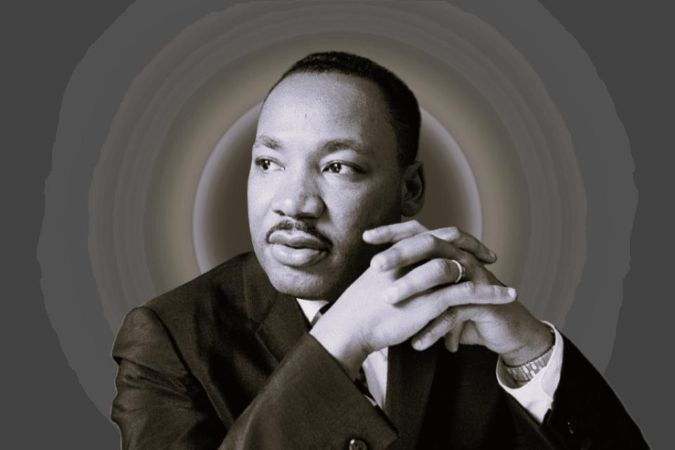
Civil rights icon and Nobel Peace Prize laureate Martin Luther King Jr. was born on January 15, 1929 in Atlanta, Georgia. Dr. King celebrated his last birthday in 1968.
Stevie Wonder helped build support for a national holiday “to show just how much we love” the drum major for justice. In the inner sleeve of Hotter Than July (1980), Stevland Morris a/k/a Stevie Wonder wrote:
It is believed that for a man to lay down his life for the love of others is the supreme sacrifice. Jesus Christ by his own example showed us that there is no greater love. For nearly two thousand years now we have been striving to have the strength to follow that example. Martin Luther King was a man who had that strength. He showed us, non-violently, a better way of life, a way of mutual respect, helping us to avoid much bitter confrontation and inevitable bloodshed. We still have a long road to travel until we reach the world that was his dream. We in the United States must not forget either his supreme sacrifice or that dream.
I and a growing number of people believe that it is time for our country to adopt legislation that will make January 15, Martin Luther King’s birthday, a national holiday, both in recognition of what he achieved and as a reminder of the distance which still has to be traveled.
Join me in the observance of January 15, 1981 as a national holiday.
One year ago this week, the billionaire owners of the Philadelphia 76ers pulled the rug out from under Mayor Cherelle L. Parker and City Council. Their proposal to construct a basketball arena atop SEPTA’s Jefferson Station was a dream for the billionaires and a nightmare for everyone else.
A year later, we don’t have answers about this debacle. The City is still fighting release of documents that I requested from the previous administration.
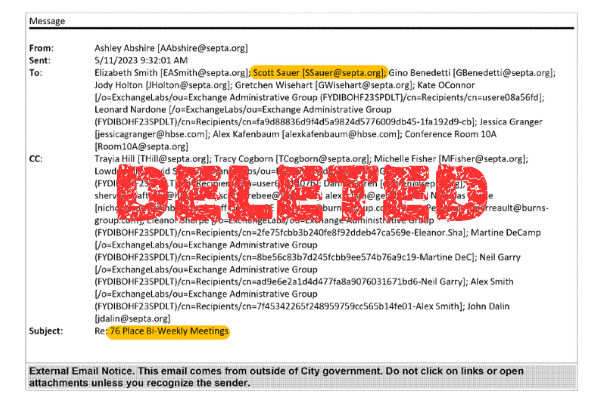
SEPTA was twice ordered to turn over records. Rather than comply with the orders, the cash-strapped agency continued to pay outside counsel to fight disclosure. With their back against the wall, SEPTA claimed the records were deleted.
In this new year, I will submit new RTKL requests for 76 Place records for the period of January 1, 2024 to January 14, 2025. I will keep on pushing until we get answers to how the billionaires hijacked the public policymaking process.
Authoritarian regimes throughout history have targeted artists and cultural institutions. Early in his administration, President Trump issued an executive order that targeted the Smithsonian Institution.
Trump has taken over federal arts agencies and installed himself as chairman of the John F. Kennedy Center for the Performing Arts. He threatens to withhold federal funding from organizations that do not bend the knee.
Nina Simone said an artist’s duty is to reflect the times and the situations in which they find themselves.
Today, we find ourselves in a situation in which Trump wants to control the narrative.
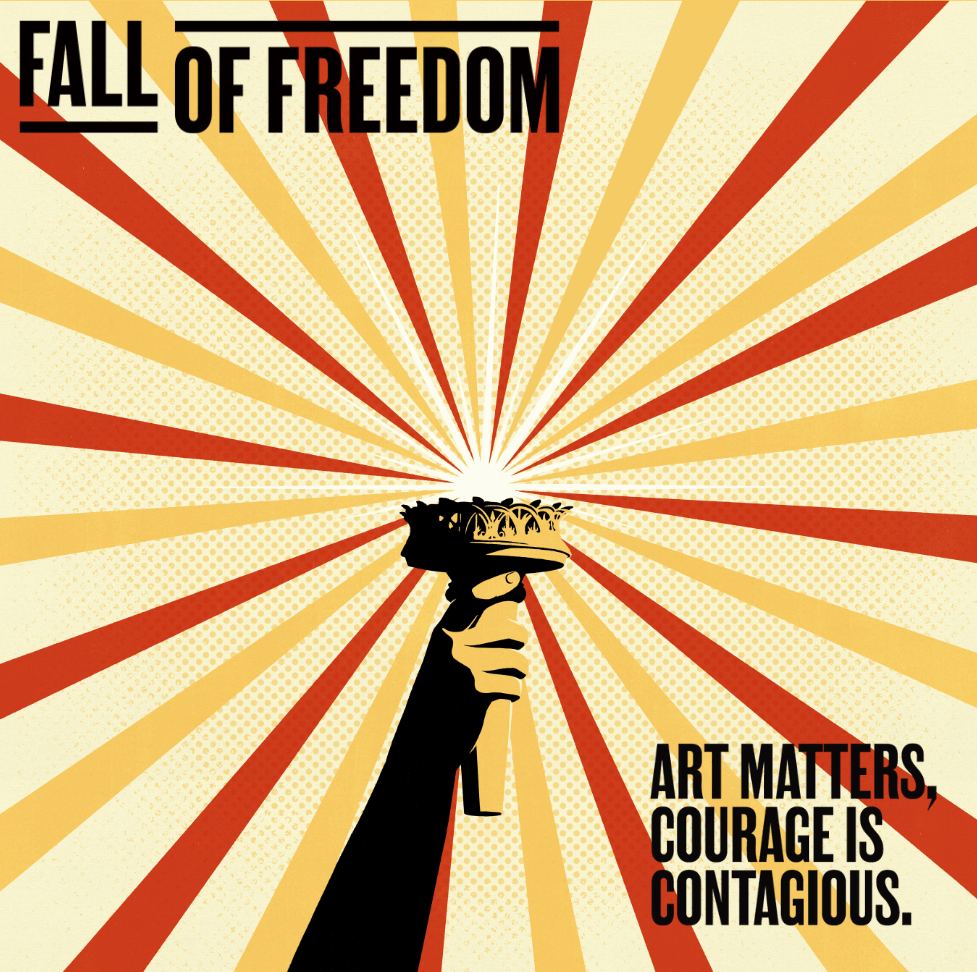
Fall of Freedom issued an urgent call to artists, creators and cultural workers to stand united against the assault on our constitutional rights and authoritarian control. Fall of Freedom is a celebration of art, courage, and free expression.
No artist reflected the times more courageously than Billie Holiday whose recording of “Strange Fruit” was named Song of the Century by Time magazine in 1999 and included in the National Recording Registry in 2002.
The walking tour will be guided by All That Philly Jazz Director Faye Anderson whose advocacy led to Billie’s induction into the Philadelphia Walk of Fame. We will visit the venues where Billie sang, the hotels where she stayed, and the site of the jazz club immortalized in the Tony Award®-winning “Lady Day at Emerson’s Bar and Grill.”
Along the way, we will stop at places connected to Nina Simone and Paul Robeson, artists who, like Billie, used their voices to speak truth to power.
The event is free and open to all, but registration is required. To reserve your spot, scan the QR code or go here.
Art matters. Courage is contagious. We are the resistance.
This time last year, the billionaire owners of the Sixers were going hard for a new basketball arena on East Market Street. 76 Place was a public transit-oriented project hitched to a beleaguered public transit agency. Then as now, SEPTA is facing a fiscal cliff. U.S. Transportation Secretary Sean Duffy is threatening to push the mismanaged agency over the cliff.
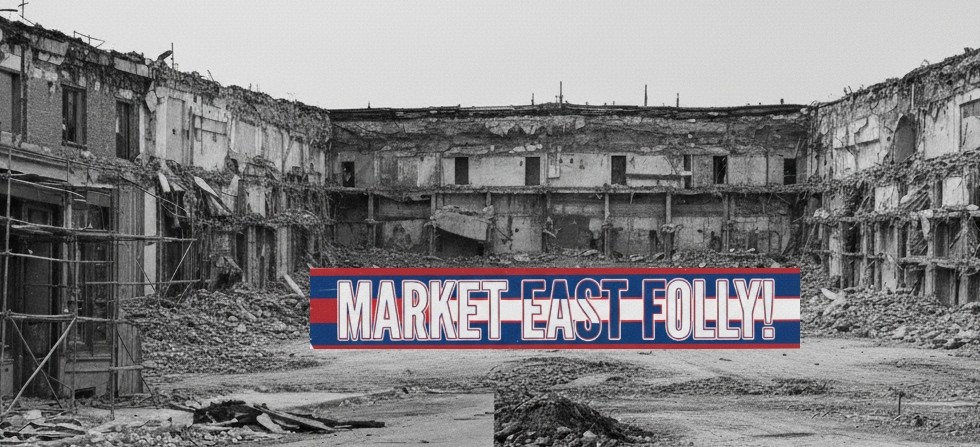
Market East has been in decline for decades. Empty storefronts line the once thriving shopping district. The Sixers and their new bestie, Comcast, plan to demolish buildings and build, well, nothing. The Philadelphia Inquirer reported:
The companies that own the 76ers and Flyers earlier this year made a high-profile commitment to help transform the long-distressed East Market Street corridor.
The first development to come out of that promise? Perhaps a mini-soccer pitch. Or a pop-up beer garden.
The teams recently hired a contractor to demolish buildings they own on the 1000-block of the beleaguered thoroughfare with the goal of eventually erecting a major development that could help revitalize the area.
But, until then, City Councilmember Mark Squilla said Friday the teams and city leaders hope to “activate” the lots slated for demolition with “pop-up” opportunities related to the FIFA World Cup and the nation’s 250th birthday being hosted in Philadelphia next summer.
The Sixers and Comcast’s development plan to shoot first and aim later was shot down by the Design Advocacy Group:
In the meantime, the sports teams that now own many buildings on the 900 and 1000 blocks of Market Street are already planning to begin tearing them down with nothing more in mind than a “pop up” beer garden or miniature soccer field.
If popups are wanted by FIFA and the 250th, Market Street already has large demolition sites—the surface parking lot at 13th and Market and the gigantic “Disney Hole” at 8th and Market. Not far away is the gaping void on Jewelers Row, a cautionary tale about premature demolition. These places remind us of past failures where rushed demolition yielded no replacement.
Of course, Market Street needs dressing up in time for the flood of visitors we look forward to in 2026. And pop-ups on existing empty sites should be part of that. But it makes no sense to stage such impulsive demolition on Market Street to create spaces we don’t need now for the not yet planned projects that may come next.
UPDATE: The Philadelphia Inquirer Architecture Critic Inga Saffron doesn’t trust the Sixers and Comcast’s process:
The long-awaited effort to reinvent Market East began in the same bombshell manner as the Sixers’ arena proposal did three years ago — with no transparency and no planning.
First, the two new BFFs of the Philadelphia sports world — the Sixers and Comcast — blindsided Mayor Cherelle L. Parker (and the rest of us) by announcing that they intended to raze several buildings on the 1000 block of Market Street, an area covering half the block. As for what they would put in their place, well, they’ll get back to us on that.
This has to be the worst idea for fixing Market Street’s woes since the last bad idea: the Sixers basketball arena.
Although SEPTA is in a transit death spiral, the agency is wasting money on outside counsel fighting release of records related to the Philadelphia 76ers’ proposal to build an arena atop Jefferson Station.
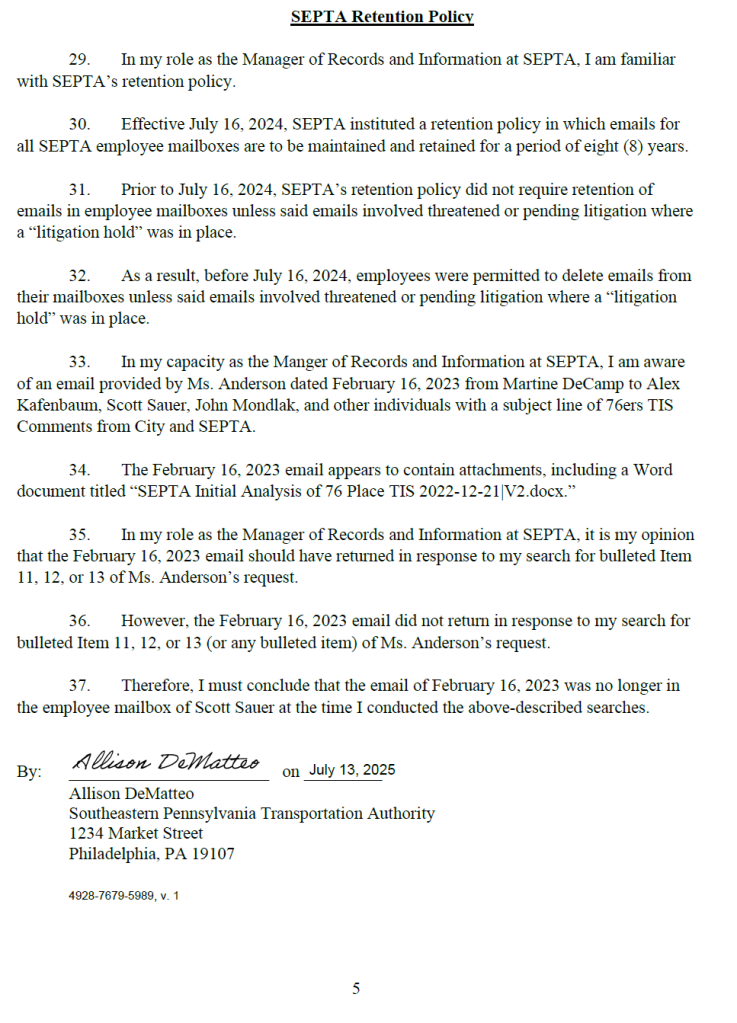
I submitted a Right-To-Know Law request on August 1, 2023 for records related to 76 Place for the timeframe of April 1, 2022 to July 31, 2023. After losing before the Office of Open Records and the Commonwealth Court of Pennsylvania, SEPTA now claims more than seven gigabytes of data were deleted. Former CEO Leslie Richards and current CEO Scott Sauer deleted records related to the most controversial proposal in the transit agency’s history.
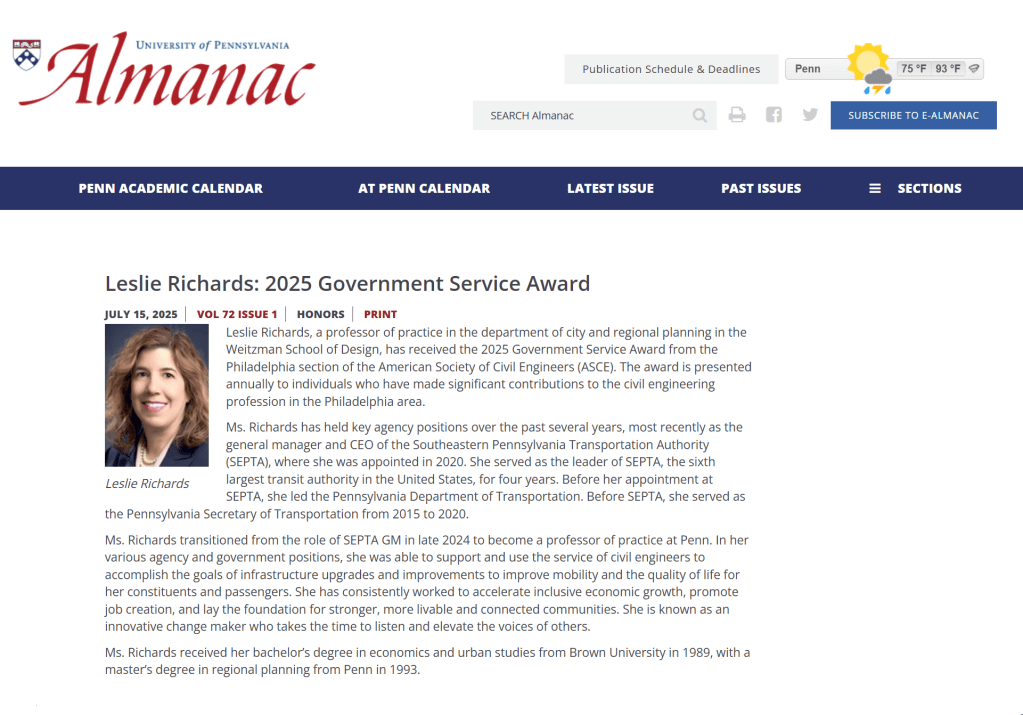
Richards left the cash-strapped agency in November 2024 but she’s still collecting a check from SEPTA.
It is said that those who can, do; those who can’t, teach. Fittingly, Richards is now teaching at the University of Pennsylvania. Penn recently announced that Richards received the 2025 Government Service Award from the Philadelphia chapter of the American Society of Civil Engineers.
In deleting 76 Place records, Richards did a disservice to the public. We have the right to know how SEPTA could have been stuck paying tens of millions of dollars for the Sixers billionaire owners’ now-abandoned vanity project.
SEPTA is Exhibit 1 as to why the Pennsylvania House of Representatives should pass Senate Bill 686, sponsored by Pennsylvania Senate State Government Committee Chairman Sen. Cris Dush. The legislation makes the intentional destruction or alteration of Right-To-Know Law records a third-degree felony.
I find it deeply troubling that Pennsylvania’s long-standing RTK law mentions no criminal offense for destroying or altering records subject to a RTK request. Not surprisingly, the rule of law is entirely thwarted whenever government officials or their staff intentionally dispose or suppress records that have been requested under RTK provisions, and which the public has every right to examine.
Those who cannot handle the truth should not get away with criminally suppressing the truth. In short, the punishment for violating our Commonwealth’s RTK law must fit the crime. It’s well past time in Pennsylvania to balance the scales of justice against this preposterous ‘get-out-of-jail-free-card’ for the flagrant destruction of RTK records with a maximum third-degree felony conviction.
It is deeply troubling officials destroyed records knowing that if SEPTA approved 76 Place, lawsuits would fly.








 PHL Watchdog