The first National Park Week was observed in August 1991 to commemorate the 75th anniversary of the National Park Service. Since 1994, it has been an annual celebration organized by the National Park Service to highlight America’s national parks and the natural, cultural, and historical resources they protect. This year, the celebration runs from August 22 through August 30, 2026.
The National Park Week soundtrack curated by the National Parks Conservation Association includes James Brown’s “Living in America.”
Today, we are living in an America in which the President’s House, a National Park Service site, was desecrated and whitewashed interpretive panels installed under the cover of darkness.
The National Parks Conservation Association is calling for a Day of Action to defend America’s national parks from attacks on park staffing, funding, public lands, and the preservation of American history. Participants are encouraged to contact government officials, support National Park Service employees, sign petitions, attend demonstrations and community events, and publicly oppose policies that threaten the parks and the stories they tell.
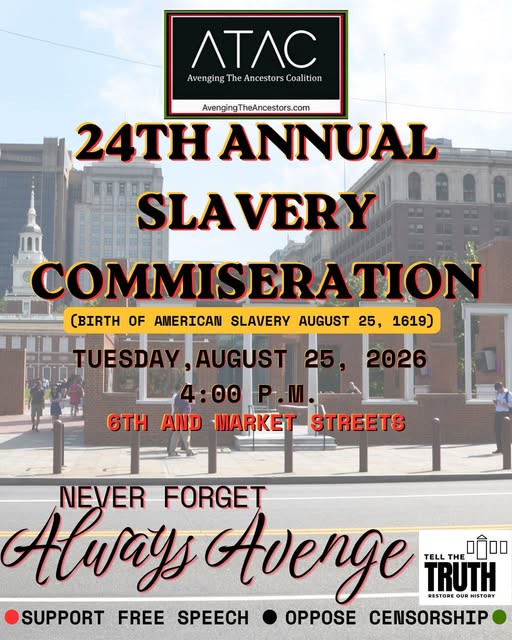
It’s serendipitous that the Day of Action coincides with Avenging The Ancestors Coalition’s mass protest at the President’s House on August 25, 2026.
Attorney Michael Coard, founder of Avenging The Ancestors Coalition, told the Philadelphia Tribune:
We will have local, state and federal elected officials, along with civic leaders, clergy and community activists. We’ve gotten permission from the city to block off the 500 block of Market Street and 6th Street from Market to Chestnut and place a massive stage in the middle of Market Street, This is going to be big. We’re not just rallying to rally. We expect to make history.
[…]
We took a page out of the playbook of our activist ancestors in the civil rights movement of the 1950s and 1960s, They sent attorneys into the courtrooms to raise issues and activists into the streets to raise hell. That’s exactly what we’re doing.
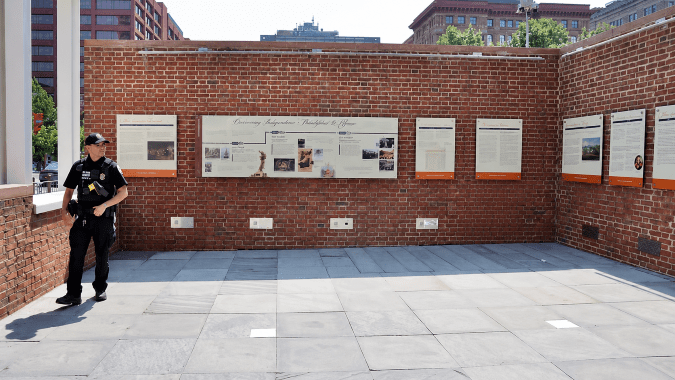
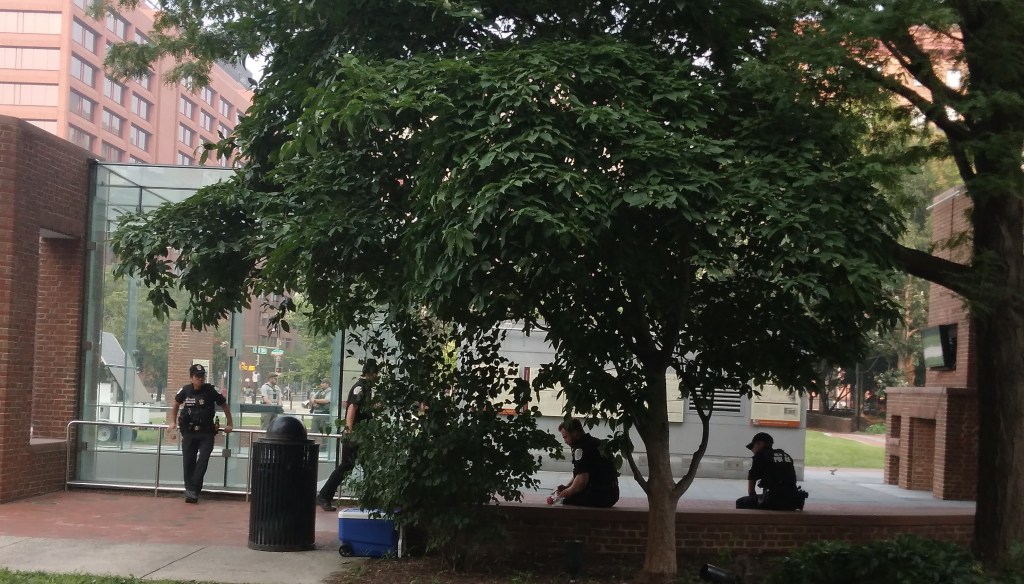
Since the truth-telling interpretive panels were swapped for President Trump’s Orwellian signs, National Park Rangers and US Police are watching people at the President’s House Site.
In the coming weeks, the Park Service will install Verkada surveillance equipment, including two security camera module trailers, zoom camera, bullet camera, fisheye camera and four-camera multisensor camera.
The Orwellian surveillance system will not be installed to protect the public. According to the National Park Service Incident Reports, there were no incidents at the President’s House Site from 2002-2025. The cameras will monitor peaceful protesters exercising their First Amendment rights.
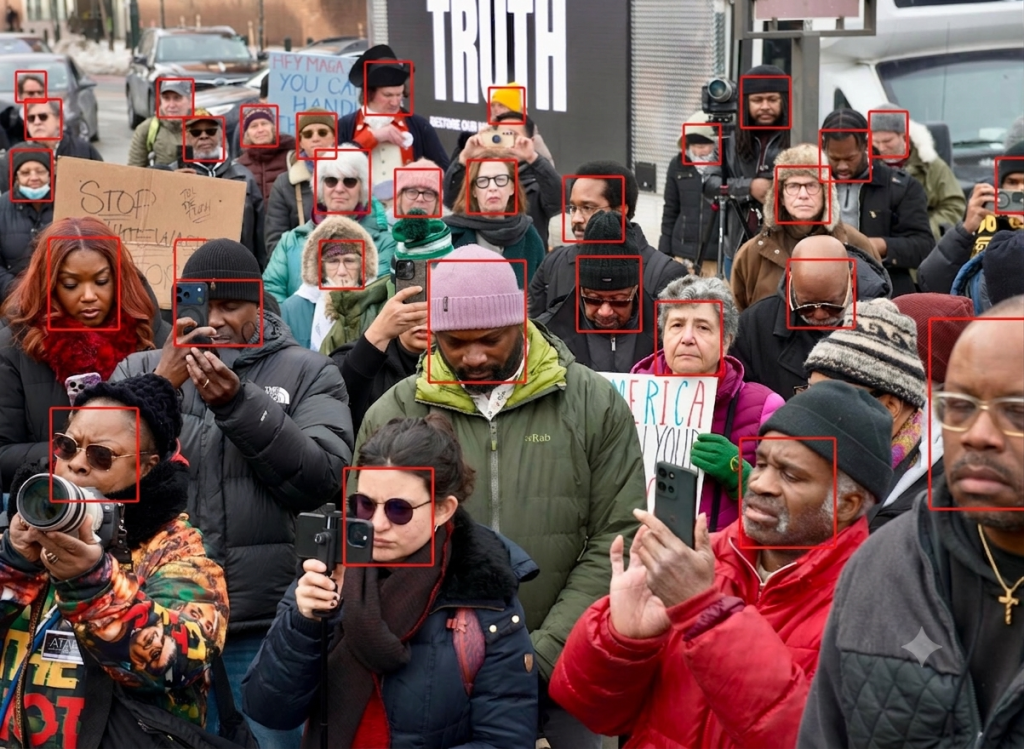
Without their permission, the faces of people who visit the President’s House or walk pass the site on their way to the Liberty Bell or Independence Hall will be scanned. Their biometric data will be stored and accessible by law enforcement agencies.
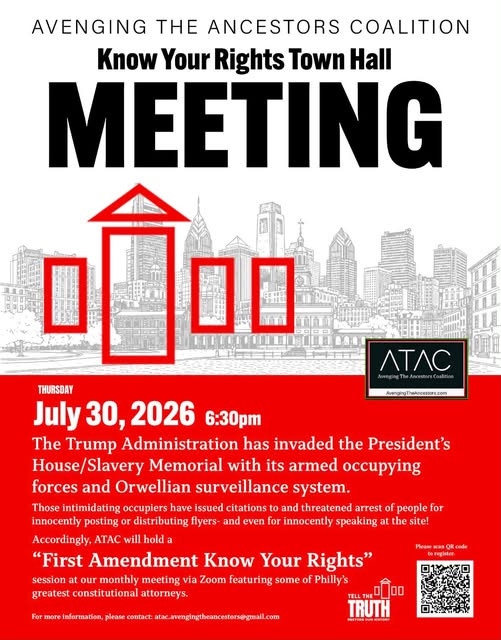
Avenging The Ancestors Coalition is convening a “First Amendment: Know Your Rights” town hall meeting via Zoom.
Registration is required. To register, click here.
Under the cover of darkness, the National Park Service replaced the interpretive panels that told the story of the paradox of slavery and liberty at the President’s House. The new Orwellian panels are a mix of obfuscations, omissions, equivocations and oxymorons.
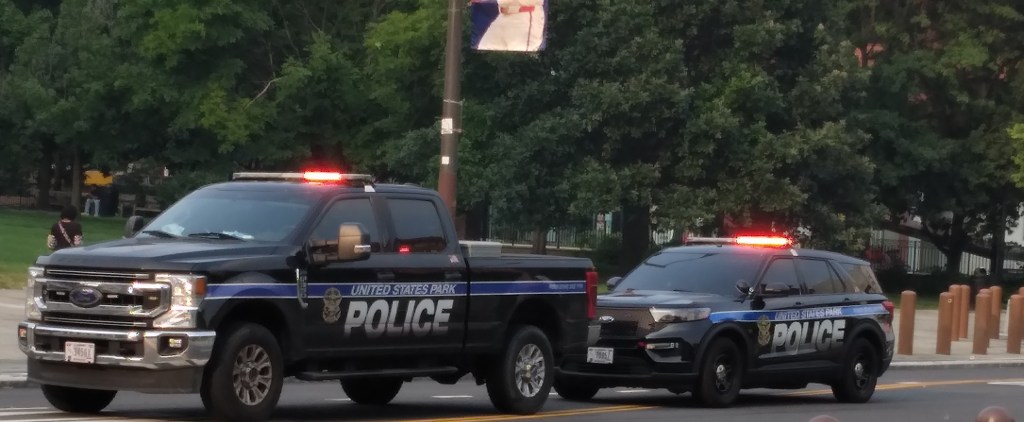
In the name of “restoring truth and sanity to American history,” President Trump has turned the President’s House into an armed camp. The site is surrounded by National Park Service Rangers, U.S. Park Police and vehicles, and new security cameras.
This is what fascism looks like. Visitors on their way to the Liberty Bell and Independence Hall will pass the President’s House Site with Big Brother watching.
During a press conference, Michael Coard, founder of Avenging The Ancestors Coalition, said, “This is nothing more than Big Brother’s Ministry of Truth, where the government turns the truth into a lie and the lie into a truth.”
President Trump’s Ministry of Truth claims the enslaved Africans living in the first executive mansion experienced a “modicum of freedom.” One is either free or enslaved. At the President’s House, as at Mount Vernon, President George Washington had absolute control over Austin, Christopher Sheels, Giles, Hercules, Joe, Moll, Oney Judge, Paris and Richmond.
While erasing the horrors of slavery, Trump’s revisionists note the president’s “discomfort” with slavery. Washington’s alleged “discomfort” did not lead him to free a single enslaved person in his lifetime. He pursued Ona Judge until the day he died. Ona was never caught.
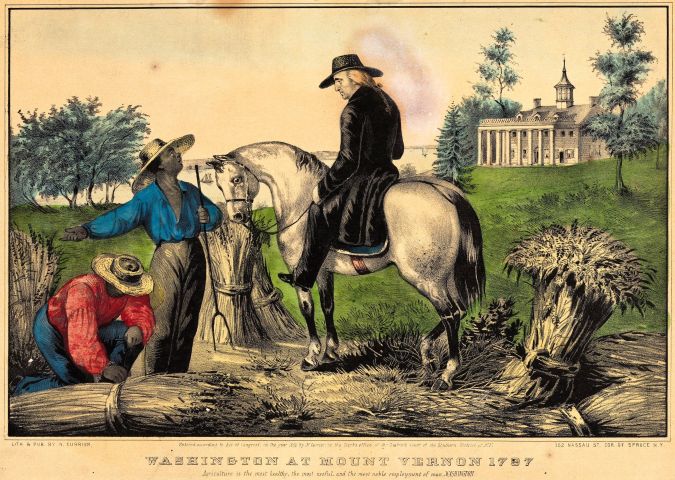
Washington stole the labor and freedom of hundreds of enslaved Black people. The propagandists highlight a single instance when “Hercules’ son Richmond was caught stealing at Mount Vernon.” While Big Brother uses a racist trope, Washington recognized the theft was an act of resistance. In a letter to his farm manager, William Pearce, Washington suspected it was for “the purpose perhaps of a journey together.” Hercules self-emancipated from Mount Vernon three months later.
The City remains committed to the honest and accurate portrayal of history at the President’s House. A portrayal that was the hard-fought and hard-won result of the effort of countless federal, state, and local officials as well as advocates, including Avenging the Ancestors Coalition, dedicated to telling the truth. A broad coalition of people who worked together to identify, create, design, fund, and implement the President’s House. They did not always agree, but together they reached agreement. They shared a truth that I hold self-evident: you cannot erase American history.
Overnight, under the cover of darkness, the federal government removed panels at the President’s House that told a thorough history of Philadelphia. It was allowed to do this by the decision of the federal court, but that it did so at night shows it understands this action is shameful, that it violates community trust. Which it is, and which it does. But the fight is not over, as we will continue the fight.
[…]
To my fellow Philadelphians and Americans, please know: I will continue fighting on behalf of everyone who supports the core belief: All of our history must be told.”
History should not be rewritten or erased because it is difficult or uncomfortable. Removing educational materials that document the experiences of the enslaved people who lived and labored at the President’s House does not change what happened. It only denies future generations the opportunity to learn from our past.
The decision to remove these panels by the U.S. Government this week only reinforces how troubling this action is. Carrying out these removals violated the community’s trust and diminished a site built through years of public engagement, collaboration, and consensus.
[…]
Removing the original exhibits is an effort to continue whitewashing American history. Removing items from the President’s House merely changes the landscape, not the historical record.
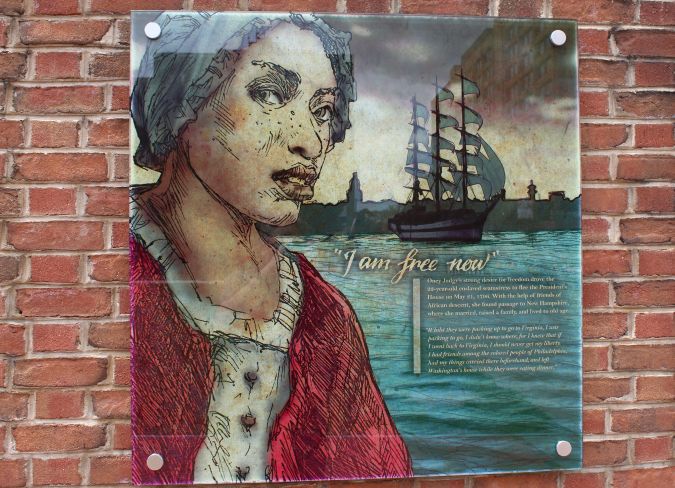
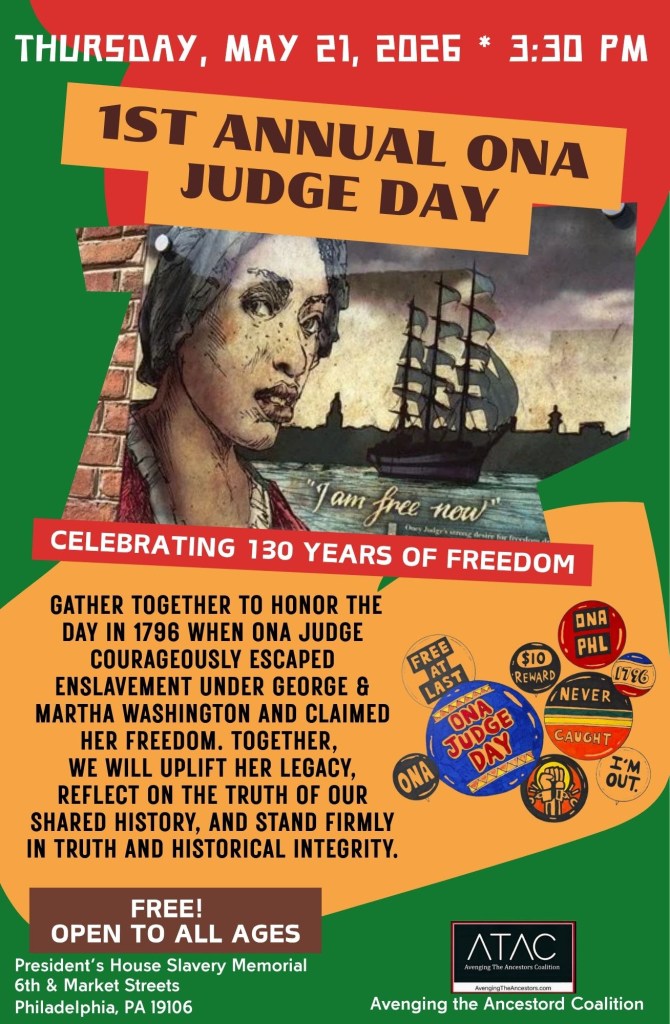
Ona “Oney” Judge (c. 1773-1848) was an enslaved Black woman held in bondage by George Washington and Martha Washington at Mount Vernon and the President’s House in Philadelphia. As Martha Washington’s personal servant, Ona was responsible for dressing and bathing her, managing her wardrobe, mending clothing, and cleaning personal rooms.
Ona “absconded” from the President’s House on May 21, 1796.
Ona was never caught.
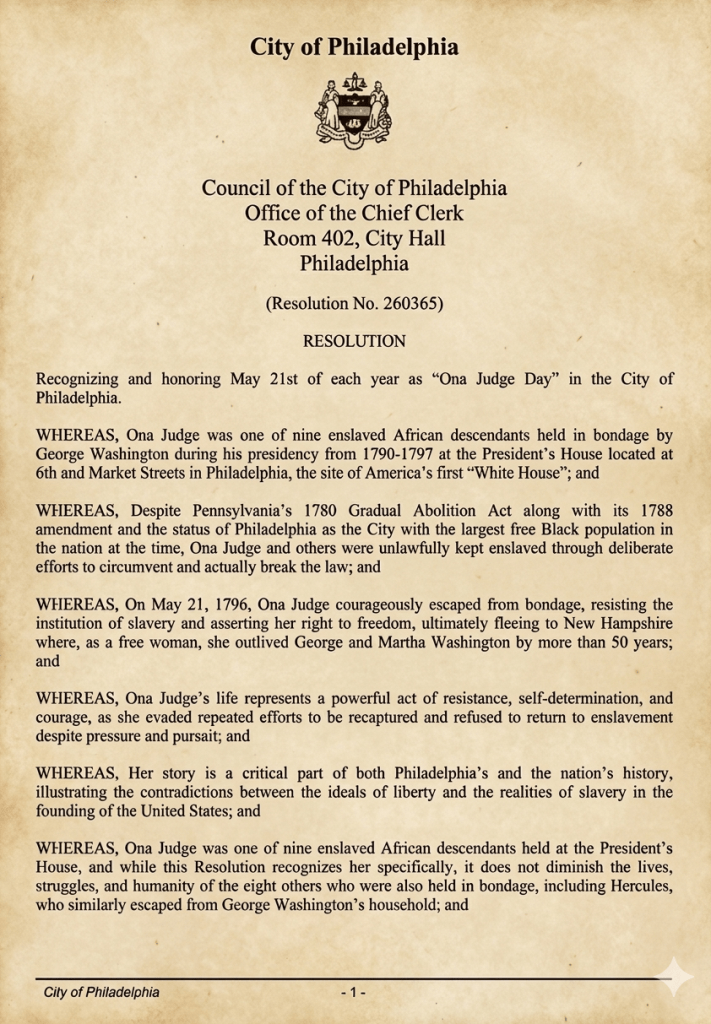
Philadelphia City Council recently passed a resolution designating May 21 annually as “Ona Judge Day.”
City Council also recognized Michael Coard and Avenging The Ancestors Coalition (ATAC) for their “sustained advocacy to ensure the truth about slavery at the President’s House is told, preserved, and publicly recognized.”
Join ATAC on Thursday, May 21, 2026 at 3:30 pm for their 23rd annual Ona “Oney” Judge celebration at the President’s House Site.
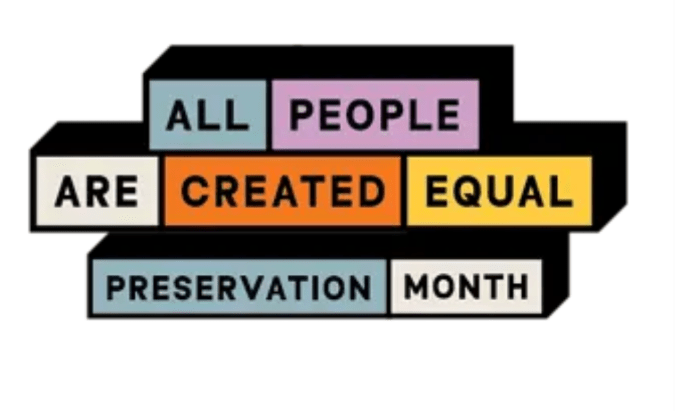
May is Preservation Month, an annual celebration dedicated to promoting the importance of preserving historic places and cultural heritage. This year’s theme, “all people are created equal,” focuses on places that tell the full American story.
As the nation marks 250 years since the Declaration of Independence, preservation demands urgency, honesty, and accountability. The words “all people are created equal” did not include Black people. The built environment carries the evidence of that contradiction.
At its core, historic preservation is about storytelling. At my upcoming walking tour, Hercules Posey’s Philadelphia, we will visit historic landmarks to tell the story of President George Washington’s enslaved chief cook. Places like Independence Hall, Congress Hall, Old City Hall and Christ Church.
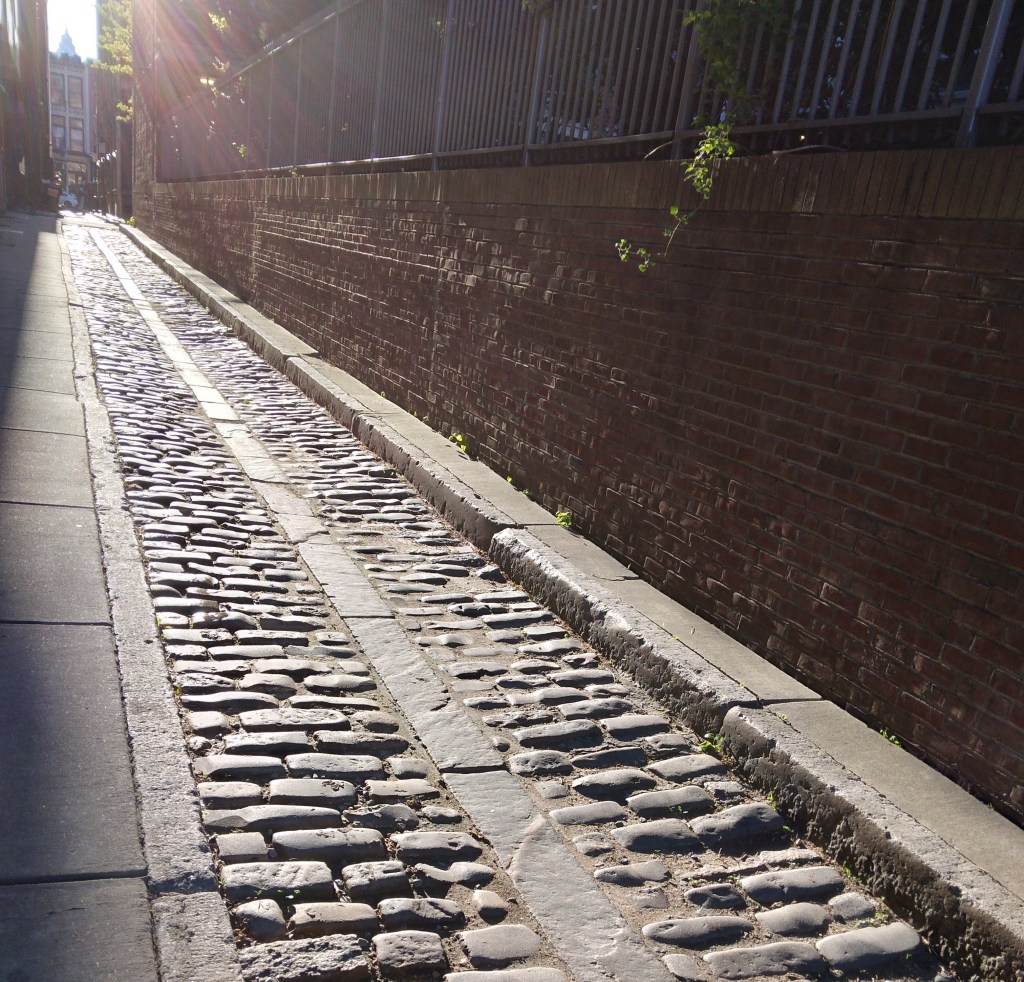
We will stop at sites that hold Hercules’ story. Sites such as Ricketts Circus and the High Street Market. We will also stroll down the 100 block of Black Horse Alley which was added to the Philadelphia Register of Historic Places’ Historic Street Paving Thematic District in 1998. Some of the granite blocks date back to Hercules’ time in Philadelphia.
Walking in Hercules Posey’s Footsteps will be held on Saturday, May 16, 2026, from 10 a.m. to 12 p.m. The event is free but reservations are required. To reserve a spot, go here.
In a Philadelphia Inquirer op-ed, Michael Coard, founder of ATAC, wrote:
These were not restorations. They were revisions — an attempt to soften and sanitize George Washington’s deep involvement in slavery, recasting a man who enslaved African men, women, and children from the age of 11 until his death as someone merely “uncomfortable” with the institution. They even suggest the enslaved in Philadelphia experienced a “modicum of autonomy.”
Let’s be clear: There is no autonomy in enslavement.
If Washington felt “discomfort,” imagine the lived reality of the 316 African descendants he held in bondage. If NPS believes “autonomy” applies to human beings in chains, then it fundamentally misunderstands the brutality of slavery.
From his first breath at Pope’s Creek to his last breath at Mount Vernon, Washington was surrounded by enslaved people. Throughout his life, he was involved with the institution of slavery. While his views on slavery changed over time, Washington’s private musings are trumped by his public actions.
Fact is, Washington did not emancipate an enslaved person during his lifetime.
Washington “owned” outright 123 Black people. His personal servant, William “Billy” Lee, was the only one given “immediate freedom” upon Washington’s death. The remaining 122 enslaved people were to be freed upon the death of Martha Washington.
Washington owned, bought, sold, rented and bargained for Black people. He pursued those who dared to seek their freedom. From 1771 to his death in 1799, he pursued freedom seekers including Harry, Hercules Posey and Ona Judge.
I am nominating President Washington’s enslaved chief cook, Hercules Posey, for a Pennsylvania historical marker. I will submit the nomination on May 15, 2026, the 214th anniversary of his death.
On Saturday, May 16, 2026, I will lead a walking tour of people, places and events in Hercules Posey’s Philadelphia. To join us, send your name and email address to phlwatchdog@gmail.com.
This weekend, I led a teach-in at the President’s House Site organized by the Association of Philadelphia Tour Guides.
There was a steady stream of visitors to the site. Most were aware that the National Park Service removed the interpretive signs and were ordered to reinstall them. However, they were surprised the President’s House Site has not been restored to its physical status as of January 21, 2026 as ordered by U.S. District Judge Cynthia M. Rufe.
The Department of the Interior appealed Judge Rufe’s order to the Third Circuit Court of Appeals. Full restoration of the site was paused by Judge Thomas M. Hardiman. As the lawsuit, City of Philadelphia v. Doug Burgum, Secretary of the Interior, et al., moves through the federal courts, the President’s House Site will remain partially restored.
On the two-month anniversary of the removal of the interpretive panels, CBS Sunday Morning aired a report, “Signs of the times: Removing stories of America’s past from our national parks.”
Jim Axelrod interviewed Alan Spears, Senior Director for Cultural Resources at the National Parks Conservation Association.
Spears has a clear message for those who cannot handle the truth about the “nuanced nature of our history”:
If you are thinking about visiting a national park, if you don’t want to tackle any of these large issues that make you think critically about race and slavery, and gender and other things like that, there are hundreds of thousands of places in the United States where you can go. Knock yourself out at Six Flags but don’t ruin it for the rest of us who have come to rely on national parks as places for that learning.
We want to maintain their ability, unimpaired, to be able to talk about the full scope of our history – wonder, warts and all.
President Trump wants to erase the fact-based history told at the President’s House Site. Removal of the interpretive panels is a “sign o’ the times.”
The fight to save the President’s House has brought renewed attention to the nine Africans enslaved by President George Washington in the shadow of Independence Hall and the Liberty Bell.
Washington’s enslaved cook, Hercules Posey, the nation’s first celebrity chef, managed the kitchen at the President’s House. He became an ancestor on May 15, 1812. To mark the occasion, I will submit my nomination of Hercules for a Pennsylvania historical marker on May 15, 2026.
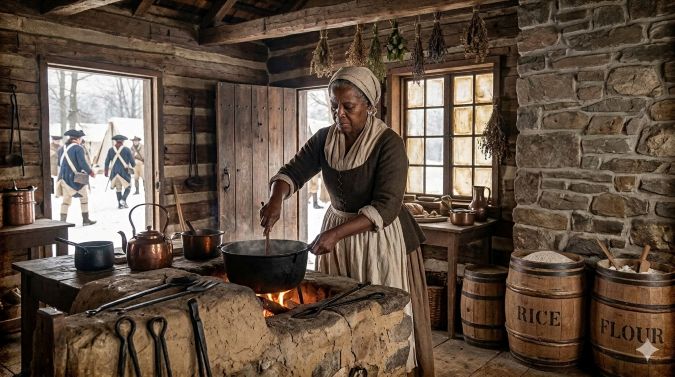
Before Hercules, there was Hannah Archer Hill (1721-1826). Born into slavery, Hannah was General George Washington’s enslaved personal cook during the grueling winter at Valley Forge.
Hannah and her husband, Isaac, purchased their freedom in 1778. She continued to work for General Washington as a salaried cook through all of his campaigns for the next six and a half years. For six months, her services were lent to the Marquis de Lafayette, who led troops under the command of General Washington.
The position of personal cook to the Commander-in-Chief required culinary skills as well as unwavering loyalty due to the threat of assassination by poisoning.
Following the Revolutionary War, Hannah and Issac made Philadelphia their home where she lived until her death at age 105.
In 2015, Hannah was honored for her contributions during the Revolutionary War. She was recognized as a Patriot by the Daughters of the American Revolution (DAR). A plaque was installed on her headstone in Historic Eden Cemetery. A DAR chapter was named in her honor.
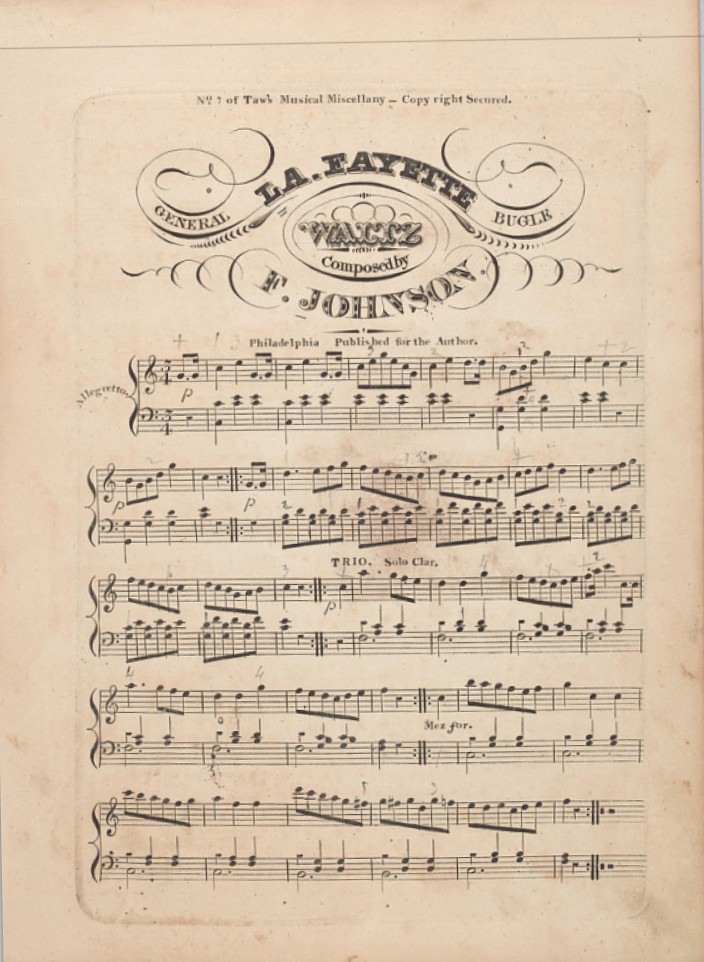
During his triumphal tour of America, the Marquis de Lafayette stopped in Philadelphia in September 1824. Lafayette’s whirlwind of events included a three-mile-long welcoming parade, a temporary arch, and a Grand Ball where Francis “Frank” Johnson, a forefather of jazz, performed his composition, General La Fayette Bugle Waltz.
Lafayette made time to visit Hannah. When he learned that “Aunt Hannah” was behind on her ground rent, Lafayette sent her money to pay off her debt. The site of Hannah’s residence is a stop on my walking tour, Hercules Posey’s Philadelphia.
To be added to the mailing list for the walking tour, send your name and email address to phlwatchdog@gmail.com.